



Bitcoin and the broader crypto market pulled back over the past week after repeated attempts to move above US$87K failed. Bitcoin briefly fell below US$81K on 8 October before recovering to around US$83K by 10 October.
Rising oil prices, US Treasury yields and a stronger US dollar weighed on risk assets. This came even as weaker US employment data reduced expectations of a Federal Reserve rate rise, underscoring the market’s sensitivity to real yields and liquidity.
Over the seven days to 11 October 2026, Bitcoin and Ethereum fell by -2.28% and -7.13%, respectively. Bitcoin’s market capitalisation was US$1.66 trillion, and the global crypto market stood at US$2.8 trillion. Bitcoin’s market dominance was 59.5%.
| Price | High | Low | Change from previous week | |
|---|---|---|---|---|
| BTC (in US$) | $83,087 | $86,753 | $80.546 | -2.28% |
| ETH (in US$) | $2,503 | $2,733 | $2413 | -7.13% |
Source: CoinMarketCap. As at 11 October 2026. Past performance is not indicative of future performance. Performance is shown in US dollars and does not consider any USD/AUD currency movements.
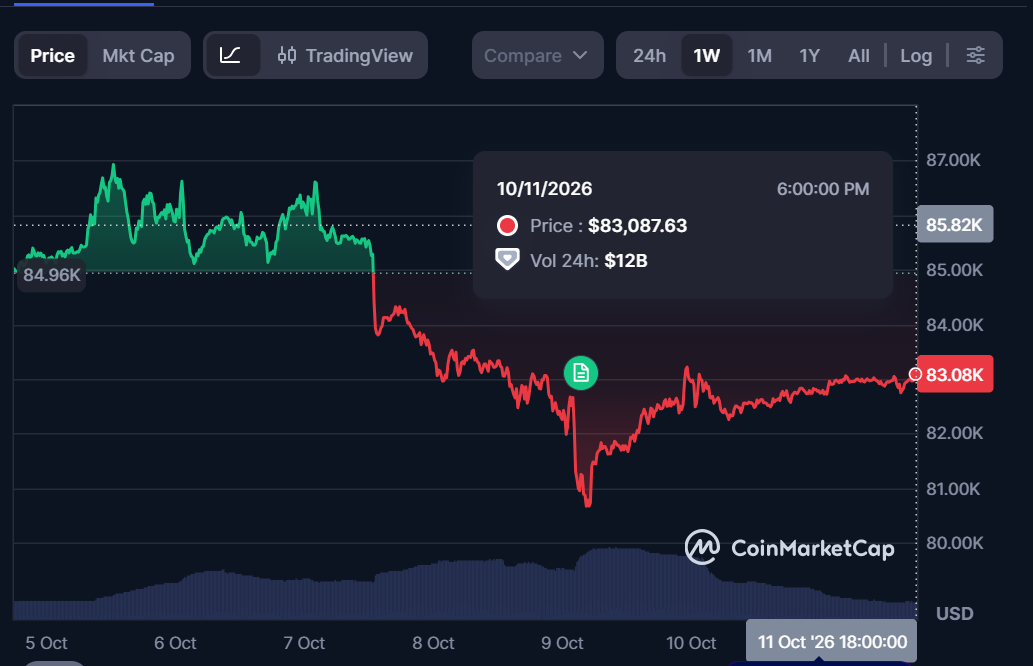
Source: CoinMarketCap. Past performance is not indicative of future performance.
Crypto news we’re watching
SEC proposes a crypto custody framework
On 1 October, the US Securities and Exchange Commission proposed tailored custody rules for registered investment advisers and regulated funds holding crypto assets. The proposal would allow certain crypto assets to be self-custodied in specified circumstances and would permit state trust companies to act as custodians. It is intended to update requirements designed around conventional securities and address the operational features of digital assets.
If adopted, the framework could make it easier for advisers and funds to offer regulated crypto strategies and could broaden the pool of eligible custodians. The proposal is not yet in force: the SEC is seeking public comment, and the final rules may differ from the draft.1
Securitize launches tokenised U.S. shares
On 8 October, Securitize said eligible investors in the US, European Union and other jurisdictions could begin trading tokenised versions of 12 US shares through its regulated broker-dealer platform on Solana. The company says the tokens represent direct ownership of the underlying shares and preserve their economic and voting rights.
The launch moves tokenised equities from a limited offshore offering into a regulated access route for some US investors, while linking a securities intermediary with public blockchain infrastructure. The initial list includes large technology and consumer companies, but availability remains subject to investor eligibility and jurisdiction. The launch is an early market test; it does not yet demonstrate broad liquidity or sustained demand2.
CRYP company spotlight
Coinbase extends USDC distribution through Samsung Wallet
Samsung plans to add USDC transfers to Samsung Wallet for eligible US Galaxy users from the last week of October, with the feature available across about 82 million compatible devices. The service is designed to support transfers to compatible crypto wallets and to eligible bank accounts in more than 60 countries.
Bastion will provide the payment infrastructure, while Coinbase will act as sub-custodian through Coinbase Prime Vault. For Coinbase, the arrangement places its custody and stablecoin infrastructure behind a large consumer distribution channel. The service has not launched yet, and access is limited to eligible US users at the outset, so the scale of actual use remains untested.3
Coinbase is held in the CRYP Crypto Innovators ETF4. CRYP provides exposure to global companies at the forefront of the crypto economy.5
Bitcoin (BTC): Realised Cap
Realised Cap values different parts of the supply at different prices instead of using the current daily close. It represents the aggregate on-chain cost basis of the supply.
According to Glassnode it peaked near US$1.13 trillion in late 2025, then fell through mid-2026 to about US$1.055 trillion in August. By 10 October, it had recovered to US$1.082 trillion, alongside a bitcoin price of US$82,928, as the price rebounded from around US$60,000. The recent rise suggests coins are being repriced at higher levels and aggregate cost basis is rebuilding, although Realised Cap remains below its late-2025 high and does not establish the source or durability of demand.
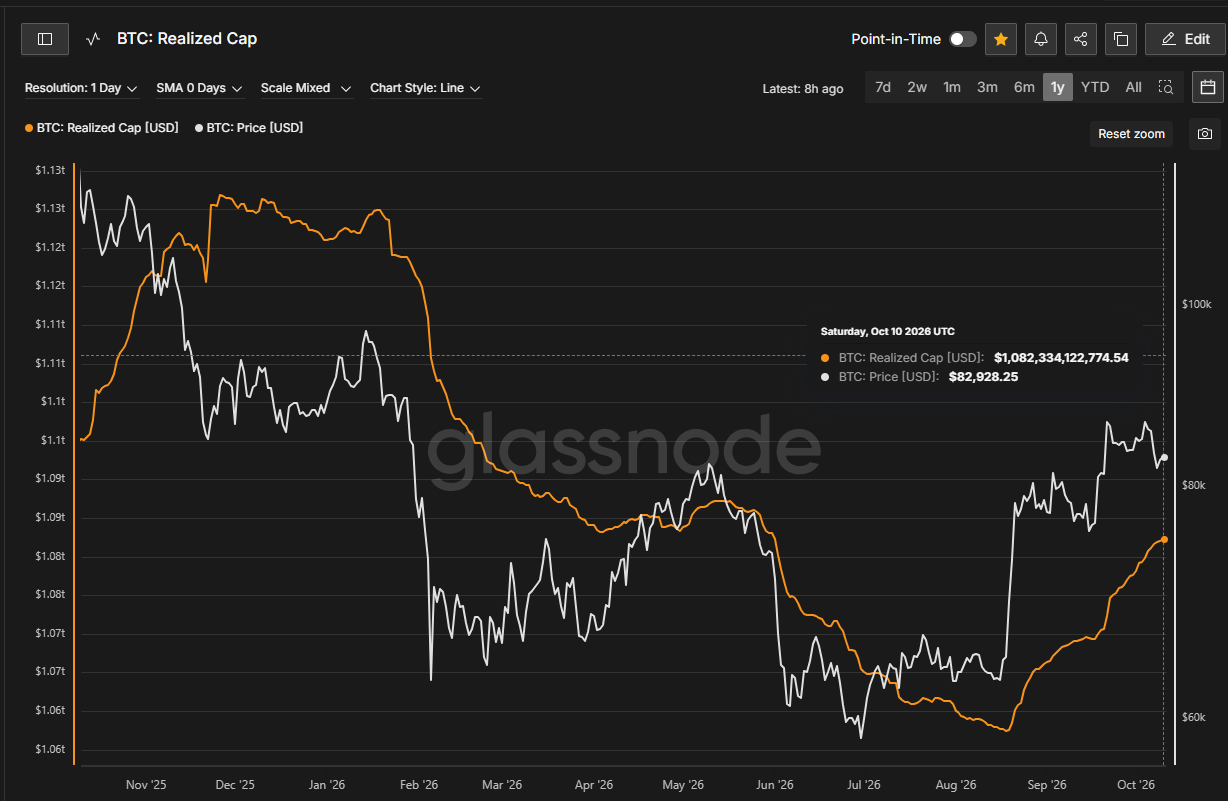
Source: Glassnode. Past performance is not indicative of future performance.
Bitcoin (BTC): Short Term Holder Net Unrealised Profit/Loss (“NUPL”)
Short Term Holder NUPL (STH-NUPL) is Net Unrealised Profit/Loss computed on Unspent Transaction Outputs younger than 155 days, serving as an indicator of the behaviour of short-term investors.
According to Glassnode data as of 10 October 2026, after deeply negative readings during the mid-2026 downturn, the metric moved back into positive territory in late August and stood at 0.103 on 10 October.
That reading sits in Glassnode’s Hope – Fear range, indicating short-term holders are in profit, though the cushion remains modest. The shift points to improving conditions for recent buyers, while leaving room for profit-taking if prices weaken; NUPL measures unrealised gains and does not show whether holders have sold or whether demand will persist.
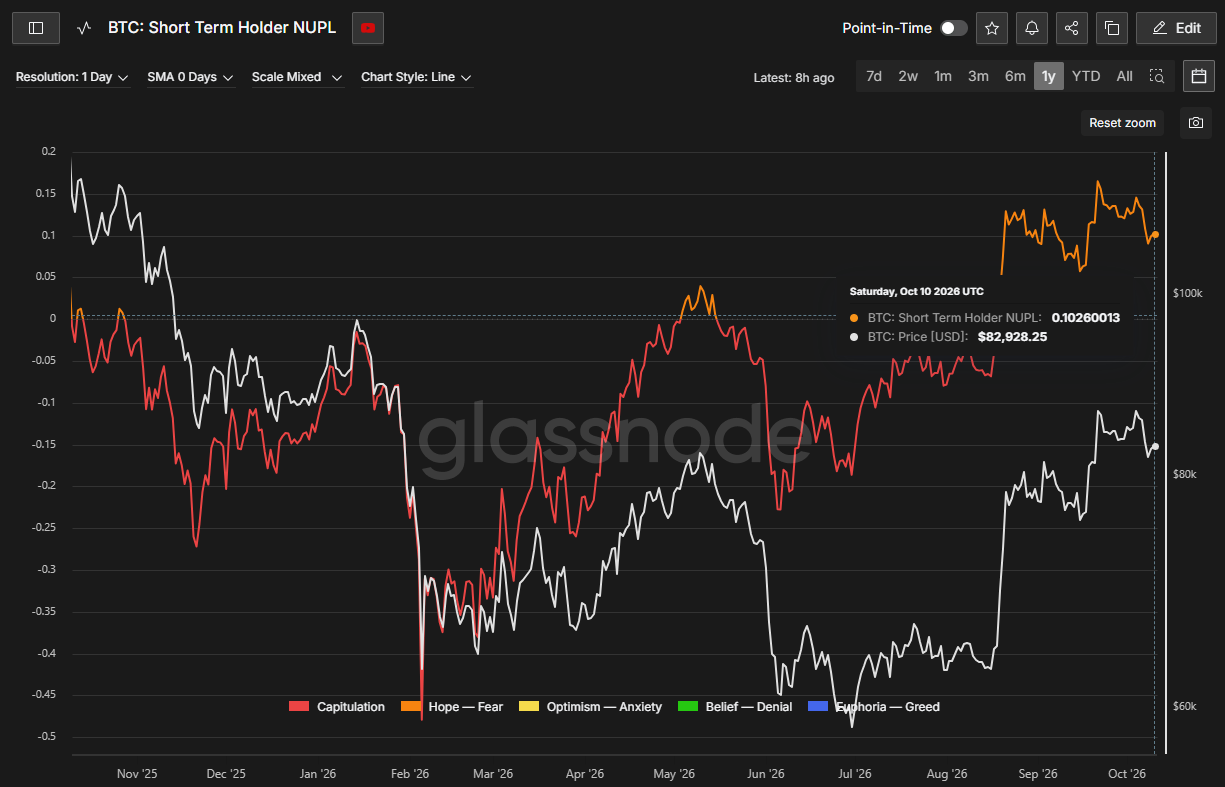
Source: Glassnode. Past performance is not indicative of future performance.
Altcoin news
Most major altcoins were lower over the seven days to 10 October, although NEAR rose 10.1%. Zcash’s NU7 upgrade activated on public testnet on 4 October, reducing the target block time from 75 seconds to 25 seconds.
The testnet gives developers, exchanges and wallet providers a live environment to assess the change ahead of a tentative 5 November mainnet date; developers are due to make a final decision on 20 October. The upgrade could improve confirmation speed if it is adopted, but the testnet is not the main network and the launch date remains conditional6.