


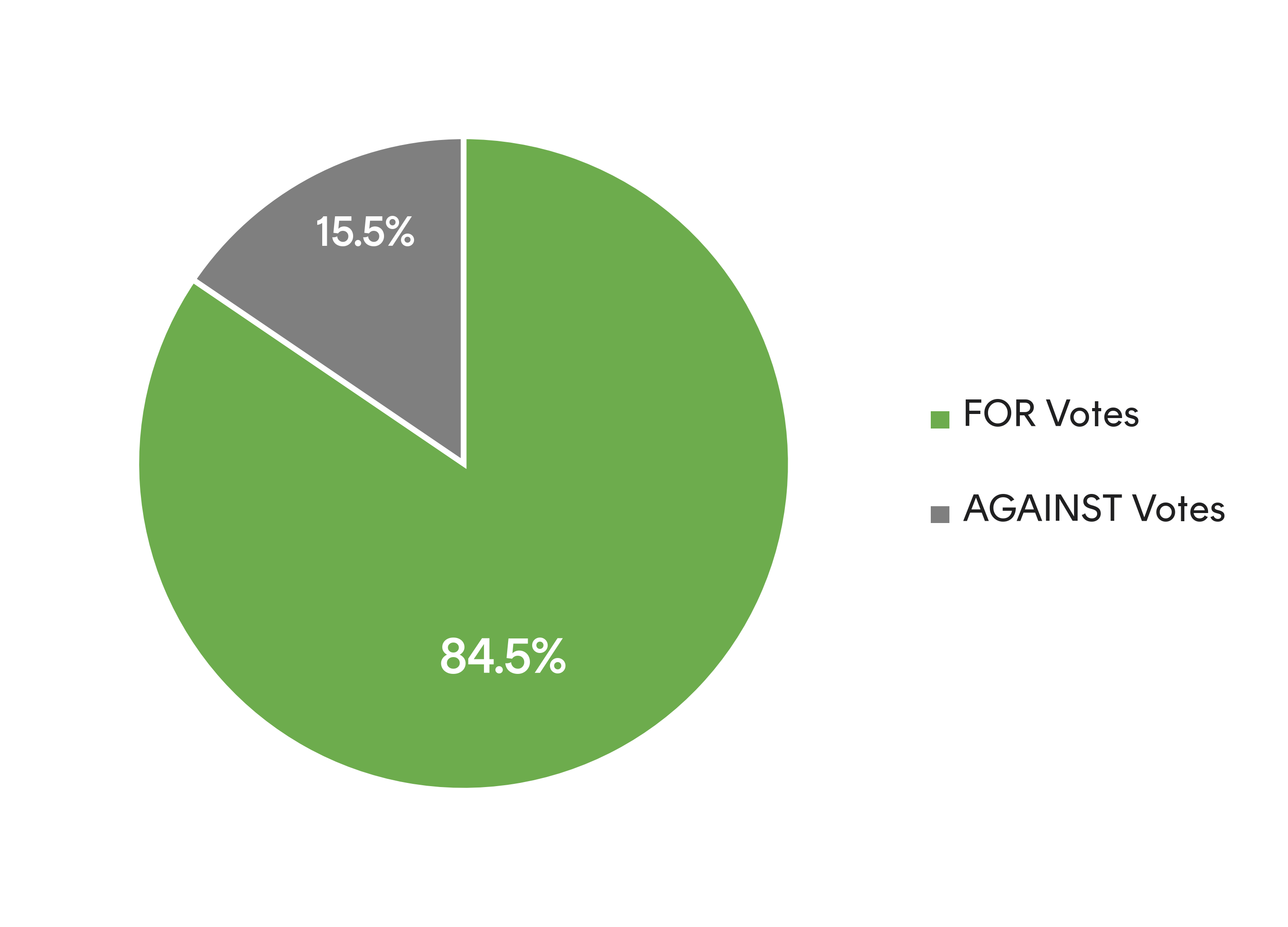
Across Betashares’ range of ethical and impact ETFs1, in the quarter ending 30 September 2026 we voted at 36 shareholder meetings on 264 individual proposals. We voted FOR 223 times and AGAINST 41 times.
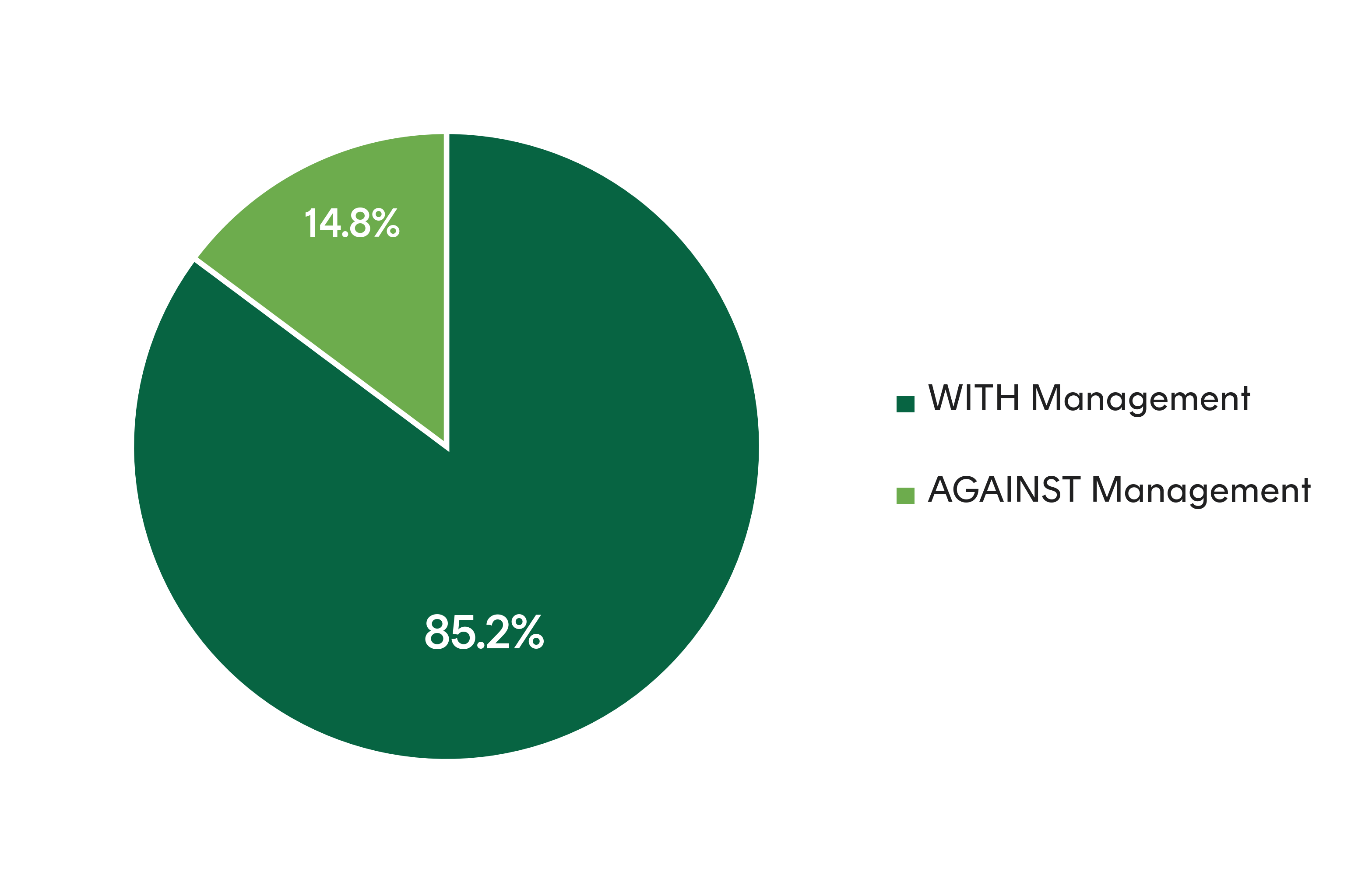
We voted WITH management 225 times and AGAINST management 39 times.
During the quarter, we supported a shareholder proposal at NetApp Inc. (NASDAQ: NTAP) requesting that shareholders be given the right to act by written consent. This mechanism allows shareholders to approve an action through written authorisations, subject to the applicable voting requirements, without convening a shareholder meeting.
We voted in favour because written consent provides an additional avenue for shareholders to address important matters arising between annual meetings. It can reduce the time and expense associated with calling a special meeting and help shareholders respond when an issue requires timely action. We view this right as a means of strengthening board accountability and shareholders’ ability to exercise their ownership rights, alongside established meeting and voting processes.
Engagement activity
Engagement activity over the quarter focused on network resilience and operational risk governance following Telstra’s outage; staff and customer safety, privacy and data governance associated with Woolworths’ consideration of facial recognition technology; and corporate oversight and progress towards the disposal of Capgemini’s US subsidiary following concerns about its immigration enforcement contract.
During the third quarter of 2026, the Responsible Investment Committee (RIC) engaged with Telstra Group Ltd following reports of a nationwide network outage that disrupted businesses and transport services and prevented some customers from connecting to Triple Zero (000). Reports that Telstra had received multiple vendor warnings regarding the equipment involved raised questions about operational resilience, supplier notification processes and oversight of critical network infrastructure.
The RIC sought to understand how critical supplier alerts are assessed, prioritised and escalated within Telstra’s operational risk framework. The Committee also asked what changes had been made following the outage to strengthen the implementation of critical software patches and hardware lifecycle management.
Telstra advised that it had accepted the findings of an independent investigation into the July outage. The investigation concluded that incorrect date information had spread through the mobile network following planned maintenance. It identified inadequate governance and oversight of the network timing system, including unclear ownership, poor documentation and weaknesses in change management, rather than a single missed vendor alert, as the root cause.
The company outlined measures implemented to strengthen network resilience and operational processes, alongside a review of vendor notification management. Telstra also advised that it was continuing to work with affected customers on complaints and compensation claims.
During the quarter, the RIC engaged with Woolworths Group Ltd following reports that the company was considering facial recognition technology in its Australian supermarkets to address retail crime and aggression towards staff. The reports raised questions about the balance between potential safety benefits and the privacy, discrimination and reputational risks associated with collecting and using biometric information.
The RIC sought to understand how Woolworths would assess whether the technology was necessary and proportionate, and what alternative safety measures were being considered. The Committee also asked about potential safeguards governing biometric data, watchlists and false identification, the role of independent monitoring, and how the company would assess whether the technology improved staff and customer safety.
Woolworths advised that incidents involving violence and weapons in stores had increased. The company outlined investment of more than $40 million over three years in safety measures, including team safety cameras, training, strengthened glass, bollards, radios and trolley lock systems. It stated that it was monitoring Australian regulatory guidance on facial recognition technology but had no firm plans for an in-store trial. Woolworths also highlighted its advocacy for Workplace Protection Orders to restrict repeat high-harm offenders from entering stores.
In New Zealand, the company confirmed it had completed a proof-of-technology trial at its Auckland support office but had not trialed facial recognition in stores. Woolworths stated that privacy and responsible data management remained key risk-management priorities, supported by internal governance forums overseeing privacy compliance, data management and related risks.
During the quarter, the RIC engaged with Capgemini SE regarding the proposed disposal of its US subsidiary, Capgemini Government Solutions (CGS). The engagement followed reports that CGS had entered into a US$4.8 million contract with US Immigration and Customs Enforcement’s Detention Compliance and Removals office. In February 2026, Capgemini announced its intention to divest CGS, citing legal constraints that prevented the Group from exercising control over the subsidiary’s operations.
The RIC sought to understand the status of the disposal process and the expected timeframe for completion. Capgemini advised that the process remained ongoing, that it had received several expressions of interest and that it remained confident a sale could be completed within a reasonable timeframe.
On 12 September 2026, Capgemini announced it had entered into an agreement to sell CGS to ITC Federal. The transaction was expected to close in the following weeks, subject to customary conditions.
The RIC will continue to monitor progress towards completion of the sale.