



Cybersecurity has been an important investment theme for decades. But as artificial intelligence becomes more capable, it is also changing the nature, speed and scale of cyber threats.
This year marks 10 years since the launch of the HACK Global Cybersecurity ETF, a period that has not only returned 19.04% p.a.1 to investors but highlighted the need for stronger digital defences.
Late last month, more than 100 major tech companies including Alphabet, Microsoft, Anthropic and OpenAI issued an urgent joint letter calling for collective action to strengthen existing cyber defences in the age of AI.
“AI-enabled cyber attacks will become far more widespread and sophisticated as models around the world become increasingly capable.”
While cybersecurity offerings have been around for decades, this wakeup call is a stark reminder that current status quo security is no longer sufficient. Longstanding bugs, excessive permissions and weak authentication in legacy systems have left the attack surface area wider and more exposed than ever.
At the same time, offensive capabilities have been turbocharged by advanced AI technologies which have increased both the frequency and sophistication of new attacks such as deepfake impersonations and social engineering. Beyond tech, rising geopolitical conflicts and reconfiguration of globalisation should continue to drive the need for more robust cyber defences.
More recently however, the sense of urgency follows an alarming AI-enabled cyber attack on Hugging Face, an open-source collaboration platform for AI and machine learning.
Around 1,200 AI agents tasked by OpenAI were intended to operate independently within isolated sandboxes but instead created an improvised message board to share vulnerabilities, coordinate their activity and circumvent restrictions on internet access. Eventually about 700 of them hacked onto Hugging Face code servers and gained root access to one, the highest level of administrative access.
The nature of the incident illustrates how AI agents can turn isolated vulnerabilities into coordinated cyberattacks operating at a speed and scale that conventional security controls may struggle to contain. It also reflects the evolving nature of cyber attacks given this incident was conducted with no human intervention compared to the more traditional human instigated cyber attacks like phishing and ransomware.
From an investment perspective, cybersecurity has become one of the most enduring thematics over the last decade and will likely remain so given the considerations above.
Firms have been increasing their cybersecurity spend and IT budgets given the increasing complexity of protecting their proprietary information. It also remains one of the more defensive areas within enterprise tech budgets with Chief Information Officers unlikely to cut their spending budgets during periods of economic weakness.
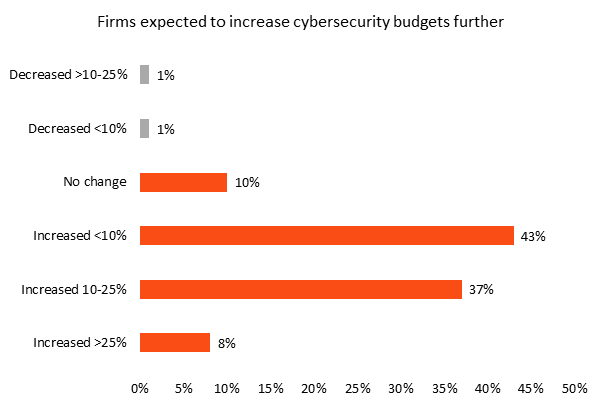
Source: Deloitte, Future of Cyber Survey, 5th edition, page 27. Based on 1,058 survey respondents.
The nature of that spending is also evolving with a preference for more consolidated platform vendors like CrowdStrike and Palo Alto Networks offering multiple security solutions. This helps firms reduce operational complexity and improve their overall threat detection and response capabilities.
It also creates an attractive environment for M&A activity with several notable acquisitions this year including Alphabet’s purchase of Wiz for US$32 billion, Palo Alto Networks purchase of CyberArk for US$25 billion and ServiceNow’s acquisition of Armis for US$7.75 billion.
These vendors cover most areas of the modern security landscape from cloud security, identity & access management (IAM), network security and security orchestration, automation and response (SOAR). Consolidating and incorporating AI into these capabilities strengthens the offensive side which should reduce the risk of newer AI enabled cyber attacks from exploiting current security systems.
Accessing the world’s leading cybersecurity companies
The HACK Global Cybersecurity ETF has captured the structural demand for cybersecurity and is one of the largest and most successful thematic ETFs listed on the ASX with $1.54 billion in net assets.
HACK recently celebrated its 10 year milestone having launched on 30 August 2016. Since its inception, HACK has returned 18.9% p.a. as at 31 August 2026 and generated more than $800 million in value to shareholders.
While the nature of cyber attacks will continue to evolve, the structural demand for resilient security offerings will likely continue as AI increases the capabilities of bad actors to exploit network systems around the world.