



This information is for the use of licensed financial advisers and other wholesale clients only.
Key points
As widely expected, the RBA raised the cash rate by 25 basis points to 4.60%. The tough tone of the RBA Statement, moreover, suggested there’s a good chance of another rate rise before Christmas.
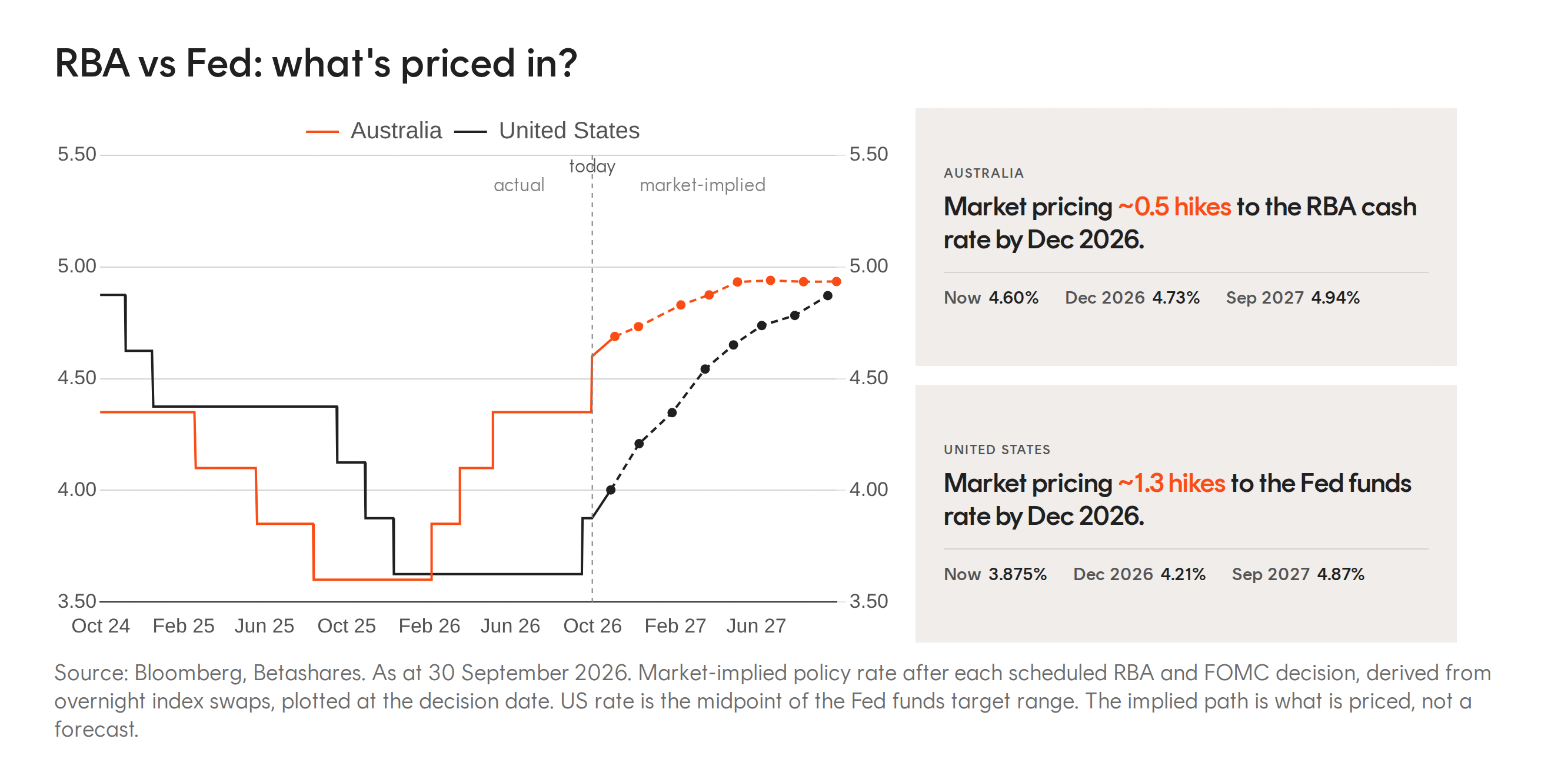
For starters, the Board’s decision was unanimous. The Board also explicitly warned that it may raise rates again if needed.
The reason for the RBA’s hike yesterday was because it saw the upside inflation risks it identified back in August “materialising”. The most concerning development was the rebound in oil prices due to the ongoing conflict in the Middle East.
A second concern is that the AI investment boom is both supporting global economic activity and pushing up prices for technology-related goods. For now, AI is acting as a positive demand shock, although it could eventually lift productivity and supply.
Ominously, the Bank noted that local firms are facing higher costs and are either raising prices or “looking to do so”. This suggests that inflation could rise even further in the months ahead.
Sadly, Australia looks set for a period of stagflationary conditions, with weak growth alongside stubbornly high inflation. While inflation remains above target, the RBA has limited tolerance for price pressures becoming entrenched.
Inflation reprieve but not out of the woods
The lower-than-expected trimmed mean CPI reading offers some hope to hard-pressed mortgage holders that another rate rise can be avoided – but they are not out of the woods yet.
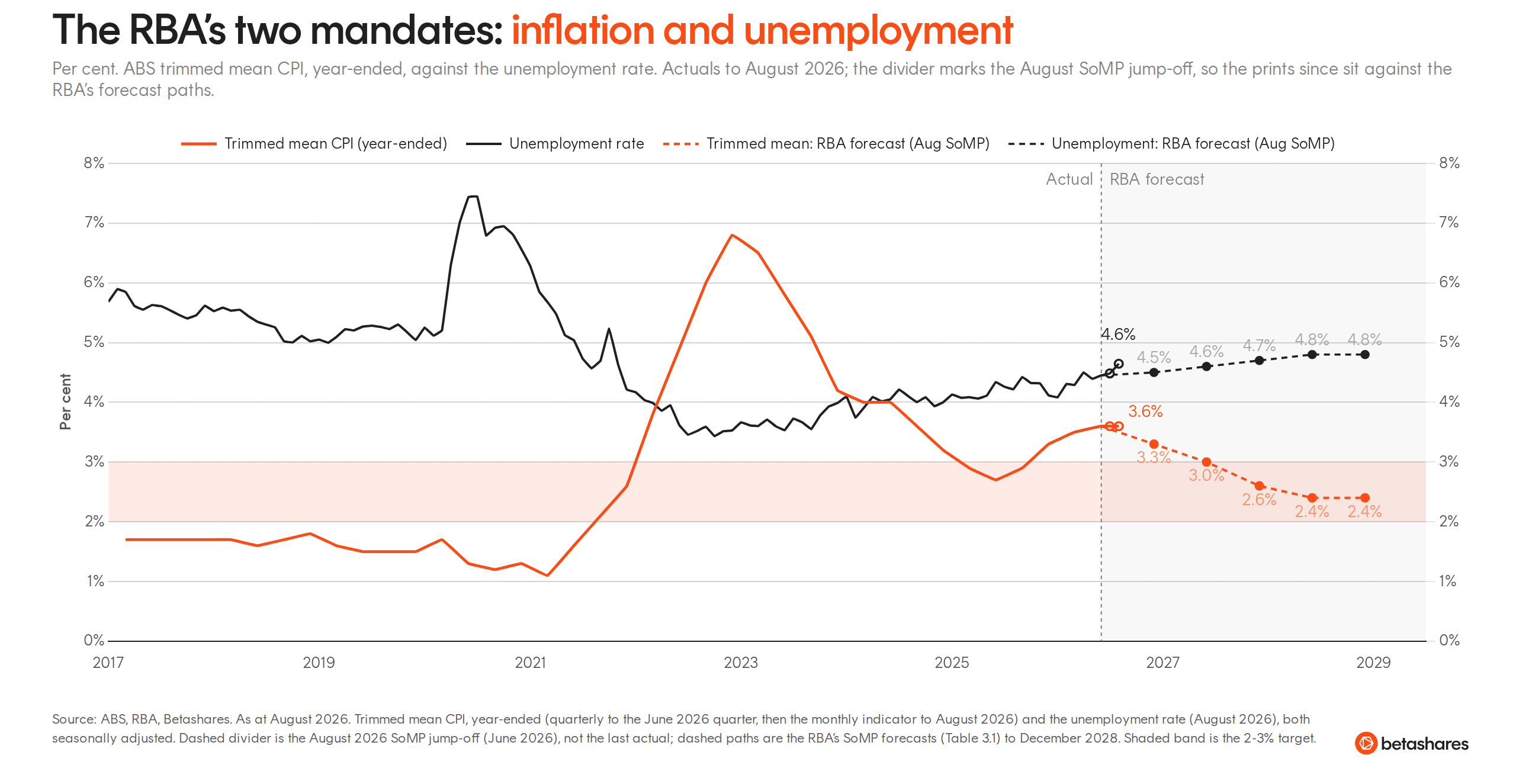
The risk of a November rate hike still hangs over the economy, though it will depend critically on the September-quarter inflation results in late October.
The good news is that the trimmed mean reading of 0.2% for August suggests some of July’s 0.5% upside surprise may indeed have reflected seasonal quirks after all. However, the annual trimmed mean rate remained at the uncomfortably high level of 3.6%.
Looking at the details, market services inflation slowed to 0.4%, following a 0.7% rise in July. That should be somewhat reassuring to the RBA.
Moreover, the split between tradable and non-tradable inflation is also notable. Annual non-tradable inflation was 4.5%, compared with 2.9% for tradable inflation, suggesting that while global factors are playing a role, the inflation problem is being driven largely by domestic pressures. This will keep the RBA on edge as it looks to extinguish the inflationary embers still present across the domestic economy.
My base case remains that the RBA will raise rates at its November policy meeting. However, the decision will depend on September-quarter CPI, due just days before the meeting.
