



Global week in review: Bond yields surge
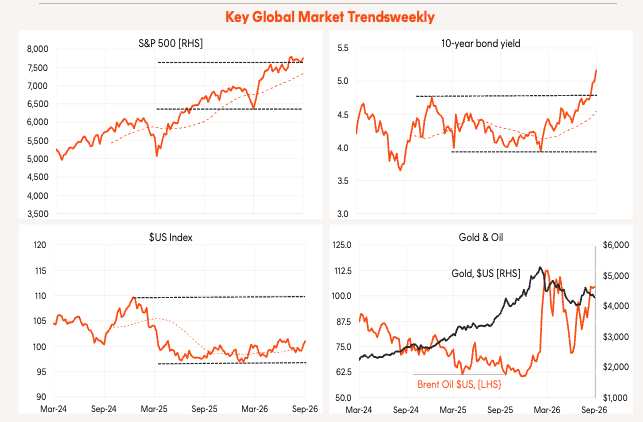
US equities managed to post modest gains last week despite a notable surge in bond yields, with easing oil prices helping to support sentiment.

Source: Betashares, Bloomberg.
The global highlight last week was broad-based strength in both the manufacturing and service sector S&P Global PMI readings for the US economy in September, which in turn led to a surge in bond yields. The manufacturing PMI index leapt from 53.9 to 57, while the services PMI hit 58.7. Also not helping were hawkish comments from Fed Governor Barr, who argued the Fed would likely need to raise rates again.
US 10-year bond yields rose 0.15% on Wednesday to 5.11% and ended the week at 5.16%. The S&P 500 dropped 0.8% on the day, though ended the week 1.2% higher.
Why the equity market resilience? Oil prices eased 2% over the week, supported by Saudi Arabia’s efforts to find a way to keep exporting oil even in the face of repeat Houthi attacks. There were also flickering hopes of renewed US-Iran peace talks on Friday, though these were seemingly quashed by Trump over the weekend.
US Treasury Secretary Bessent also boosted sentiment early in the week after suggesting US-China talks ahead of the Trump-Xi meeting were successful. As it turned out, Chinese President Xi’s meeting in Washington did not seem to lead to much at all!
All that said, likely the key driver of equity market resilience remains economic resilience, with the AI boom underpinning both US economic activity and corporate profits. US bond yields are rising for a reason – the US economy is strong.
Global week ahead: US inflation and payrolls
Two key US economic reports this week will keep debate on the Fed’s next move alive and well.
First, August’s personal consumption expenditure deflator (PCED) is due, with core prices -excluding food and energy – expected to rise 0.3%, matching the (higher than expected) 0.3% increase in the core CPI. It will remind markets that the US retains a simmering inflation problem, with a step up in core inflation readings over the past month.
Friday then sees the release of the September payrolls report with a 100k employment gain expected, which should keep the unemployment rate steady at 4.1%. Employment rose a solid 162k in August.
Global equity trends: Technology gains further
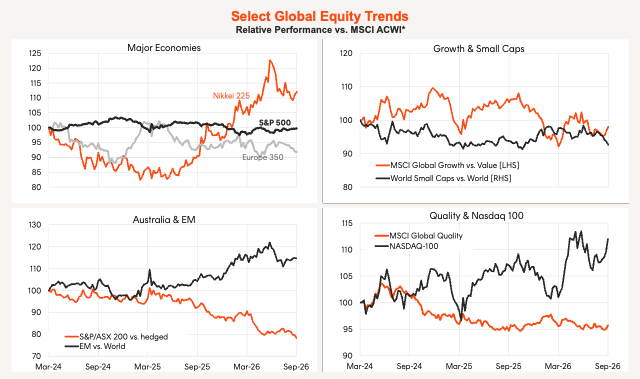
Despite AI concerns, the global technology sector ended higher again last week while energy and health care pulled back further.
Sector trends remain choppy, though there’s been some bounce back in the relative performance of technology – along with the US and emerging markets – in recent weeks.
*All but value factors. Local currency basis. Source: Betashares, Bloomberg.
Australia week in review: Firm employment
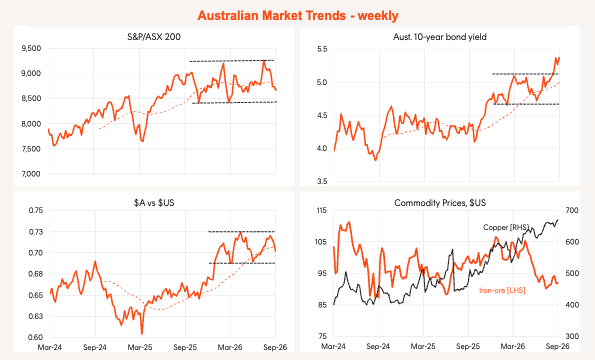
Local stocks edged lower again last week with a firm employment report leaving the market convinced the RBA will raise rates this week.

Source: Betashares, Bloomberg.
After a surprise 15k drop in July, employment rebounded by a solid 39,500 in August. Employment is up 1.6% over the past year, with 238,000 jobs created over this period.
Taking some of the gloss off this result, however, all the August rebound in employment was in part-time jobs, with full-time employment declining by 6.3k. Some of the growth in part-time employment – and rise in labour force participation – could reflect the temporary hiring of workers to undertake the Census survey during the month.
Also on the soft side, the unemployment rate leapt to 4.6% from 4.4% in July, thanks to strong growth in the number of Australians willing and able to work.
The ABS also notes that changes to its survey collection methodology could have added to the volatility or “noise” in the August employment result.
All up, given possible Census effects and statistical quirks in last week’s result, the strength in employment in August needs to be taken with a grain of salt. That said, the RBA will likely be guided by the still reasonably firm range of other labour market indicators, such as job advertisements and corporate hiring intentions.
Local equity market trends: Defensives favoured
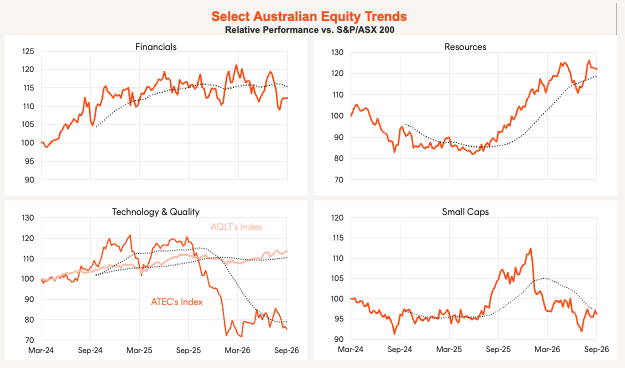
Consumer staples and the defensive health care sector did best again last week while utilities fared the worst.
As is the case globally, sector trends remain choppy. The resource sector’s recent outperformance is being challenged by higher global interest rates and the risk to global growth that this entails. If anything, the current macro backdrop favours local defensive sectors.
Source: Betashares, Bloomberg.
Australia week ahead: Labour market report
The local highlight this week will be the outcome of the RBA policy meeting tomorrow afternoon. To my mind, while last week’s August labour market report was somewhat mixed, the overall strength in employment was likely the final nail in the coffin for a Reserve Bank interest rate increase tomorrow.
For the RBA, the lift in unemployment will likely be regarded as unfortunate, but the price that needs to be paid to create more slack in the economy and lower domestic-demand-driven inflation pressure.
Other news of note this week will be the August monthly CPI report on Wednesday, along with house prices in September and the Q3 measure of job vacancies.
After a firm 0.5% gain in the monthly trimmed mean measure of inflation in July, interest will be on the extent to which inflation eases back – suggesting some of the July gain was a seasonal quirk. The market anticipated a smaller 0.3% trimmed mean monthly gain in August, though this would still result in a lift in annual core inflation from 3.5% to 3.7%.
On Thursday, the Cotality measure of house prices is likely to show further weakness of around 1% nationally in September, taking the decline since the peak earlier this year to 4.5%. Also due that day, the Q3 measure of job vacancies is likely to show employment demand is holding up.
Have a great week!
