

Hans Lee
5 minutes reading time


This piece was first published on 30 July 2025. It was updated on 15 December 2025.
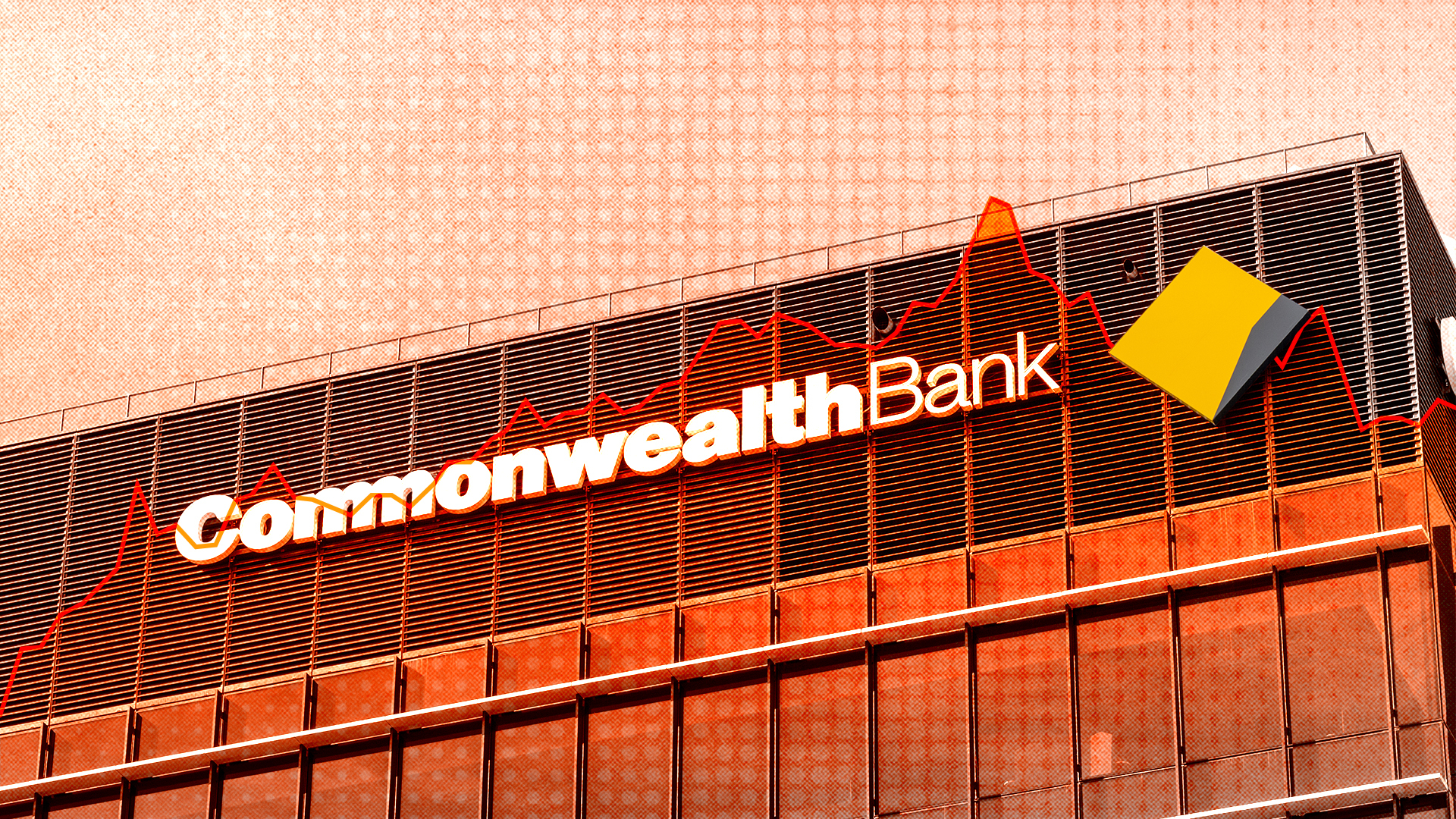
In June 2025, the Commonwealth Bank of Australia (ASX: CBA) hit a significant milestone: a $300 billion market capitalisation. It was a remarkable statistic for a number of reasons, mainly because it made CBA’s stock one of the most expensive of its kind in the world.
But the milestone and the fall that ensued served as a teaching moment for all investors, even those who hold ETFs only.
Lesson 1: The price you pay can matter
As legendary credit investor Howard Marks puts it, “It’s not what you buy, it’s what you pay”.
At its peak in mid-2025, CBA had become the most expensive bank in the world, thanks in large part to a 45% rise in its share price over FY251. Australia’s biggest consumer bank had also earned this title due to its lofty price-to-earnings (P/E) and price-to-book (P/B) ratios – both of which were well above those of global retail banking peers like Bank of America and TD Bank.2
These ratios are commonly used by investors to gauge how highly the market is valuing a company. In CBA’s case, the numbers suggested investors were willing to pay a premium at the time.
CBA’s milestone is therefore a reminder that buying any asset at stretched valuations, no matter its quality, can limit future returns. In fact, had you bought CBA on 1 July 2025 and held it until now, you’d actually be recording a ~16% loss on your initial investment.
It also reinforced the importance of working on a disciplined investing plan as opposed to chasing any asset at any price. Unless you have the time to value every single asset you want to buy, a more time- and cost-efficient approach may be to dollar cost average into an ETF.
Dollar cost averaging means investing a set amount into chosen ETFs on a regular schedule, regardless of what the market is doing. It helps take the emotion out of investing and can be an easy way to stay consistent and grow wealth steadily. Dollar cost averaging into ETFs also helps investors avoid the risk of putting all your eggs into one basket – both in terms of timing and in terms of individual assets.
Lesson 2: Diversification has always mattered – now more than ever
CBA’s milestone also emphasised the importance of single stock/asset risk in an investor’s portfolio.
Data collated by Bloomberg suggests that CBA is currently worth 8.5% of the entire ASX 200. Earlier this year, when its weighting was 11.8%, CBA became only the fifth company in the last ~25 years to be worth at least 10% of the entire Australian sharemarket3.
It also signified (in hindsight) what a huge potential liability CBA, as a single entity, had become.
This speaks to two things: 1) that single stock risk is very real and that thoughtful diversification is a must for any smart investor and 2) one of the best ways to achieve this goal is through ETFs.
To achieve this, one ETF you could consider is AQLT Australian Quality ETF . Unlike traditional ETFs that weight holdings by market capitalisation, AQLT uses quality metrics. You can learn more about how quality investing works and some of the companies in AQLT here.
Another ETF you could consider is HYLD S&P Australian Shares High Yield ETF . HYLD provides exposure to higher-yielding Australian shares and doesn’t currently hold CBA – as Senior Investment Strategist Cameron Gleeson noted, CBA was no longer attractive for dividend-focused investors. HYLD, however, has exposure to other major banks and high-yielding companies, meaning investors have the opportunity to earn solid returns without concentrating on individual stocks.
You can invest in both AQLT and HYLD brokerage free on Betashares Direct.4
Lesson 3: The power of distribution reinvestment
There is no question that one reason a lot of investors buy (and in many cases, never sell) CBA is because of its dividend.
By reinvesting dividends instead of taking them as cash, investors would have accumulated more shares at various price points, helping to smooth returns through the recent volatility.
The same takeaway could also apply to ETFs: regardless of whether it is a broad-market ETF or one with a specific investment goal such as income.
Reinvesting your ETF distribution may help your investment grow steadily over time thanks to the miracle of compounding. Setting up a disciplined dividend reinvestment plan with your ETFs can help quietly and effectively build long-term wealth. In addition, if you want a little flexibility, you can reinvest part of your distribution and receive the remainder of it in cash. But as this article demonstrates, an automated DRP can help enhance the compounding effect that comes with staying invested. Distribution reinvestment for ETFs is available through Betashares Direct.
Nuggets of wisdom for every investor
CBA’s milestone offers a reminder that successful long-term investing often comes down to fundamentals: paying attention to valuations, managing concentration risk through diversification, and harnessing the power of compounding through reinvestment. While market milestones grab headlines, it’s principles that matter most for building wealth over time.
Sources:
1. Bloomberg, as at 30 June 2025.
2. https://vestedfinance.com/blog/pe-vs-pb-ratios-and-how-to-calculate-them/
3. For the 8.5% figure, see Bloomberg, as at 26 November 2025. For the 11.8% figure, see UBS Australian Equity Strategy, 16 June 2025. It can also be found at: https://www.marketindex.com.au/news/what-happens-to-the-asx-200-if-cba-experiences-a-selloff
4. Refer to the Betashares Direct PDS for information on interest retained by Betashares on cash balances.