



Global bond markets remain challenging to navigate, and three forces are driving volatility.
The first is policy uncertainty, with the Fed’s shifting reaction function under new Chair Kevin Warsh raising questions about the commitment to the 2% inflation target, in addition to a lack of clarity over the central bank’s broader communication strategy. The second is the AI investment boom, which is spurring demand for capital, pushing real yields higher, and creating a new source of bond supply. And the third is the Iran energy shock, which has added oil price volatility and a near-term inflation impulse, driving the hawkish repricing across central banks, with high government deficits also weighing at the margin.
While price pressures remain in focus, the rise in long-end yields has been led by real yields rising to post-GFC highs rather than long-term inflation expectations, which are largely anchored. Oil can still influence the policy path by lifting near-term inflation and narrowing central banks’ room to ease, but markets are placing progressively less weight on the risk of sustained disruption to shipping through the Strait of Hormuz.
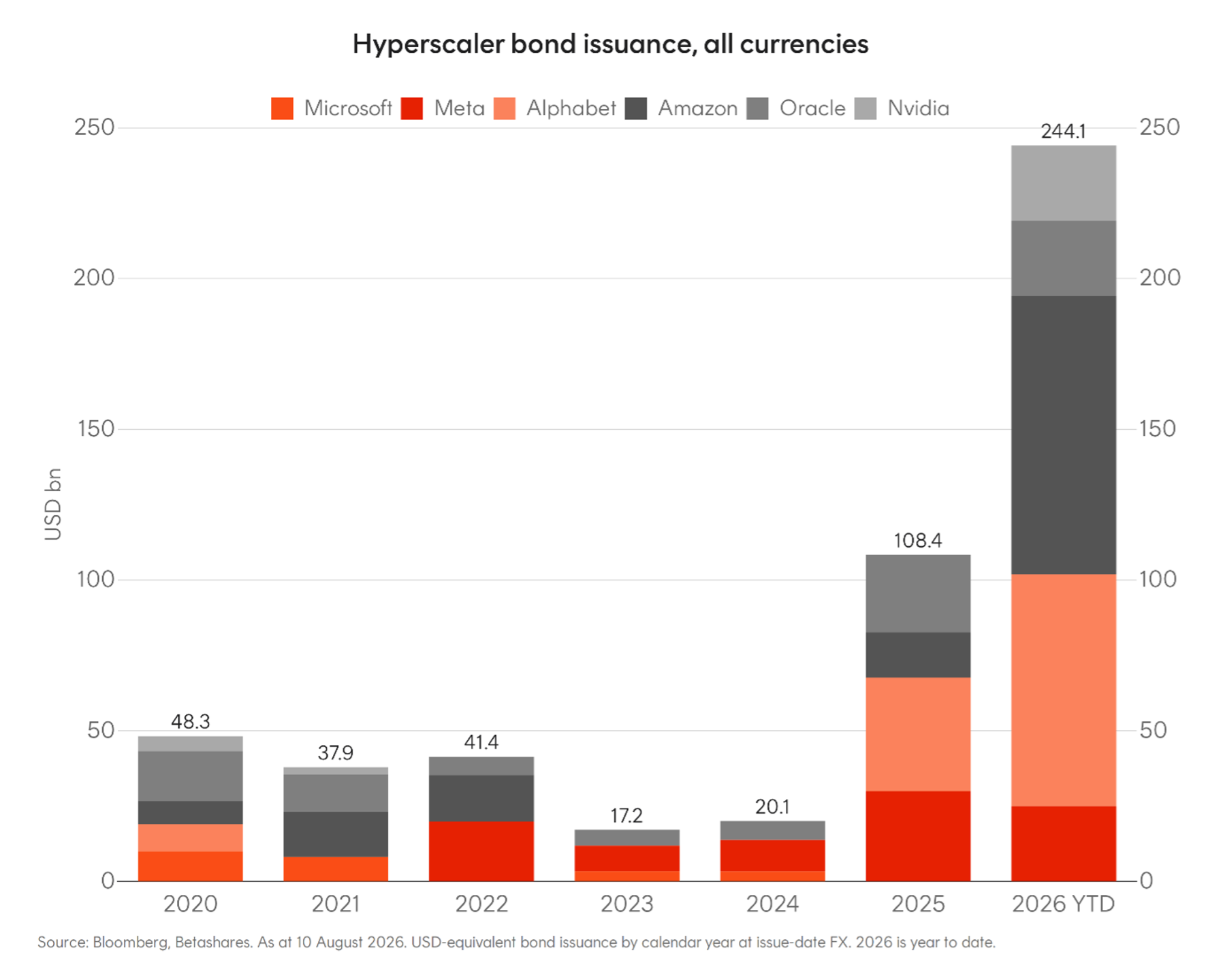
Supply is now front of mind. In addition to elevated Treasury issuance as the US government maintains a deficit of around 6% of GDP, corporate issuance from the technology sector adds a second layer of supply to the US bond market. Issuance from Microsoft, Meta, Alphabet, Amazon, Oracle and Nvidia has reached US$244 billion this year to 10 August, already double 2025’s full-year record, and the figure for the broader capex build-out is larger once private loans, special purpose vehicles and neocloud issuance are counted. The Hyperscaler cohort is currently guiding US$800 billion in capex for 2026 against US$412 billion last year, an amount operating cash flow alone can no longer cover. Much of the resulting debt is long dated, so the build-out is adding duration as well as volume to the market.
Credit markets are also starting to differentiate by sector and issuer. Investment grade technology spreads now trade wide of the broader market after years inside it, and the gap in high yield is wider still. The cost of credit protection has also surged for some names, most notably Oracle, although it is unclear how much of this reflects hedging activity amid record supply rather than genuine concerns over credit quality, a recent S&P downgrade to BBB-minus notwithstanding. In addition, the sheer scale of the capex cycle widens the distribution of possible outcomes, with credit investors naturally more concerned about downside risks rather than the upside potential.
Australia the shelter to global bond headwinds
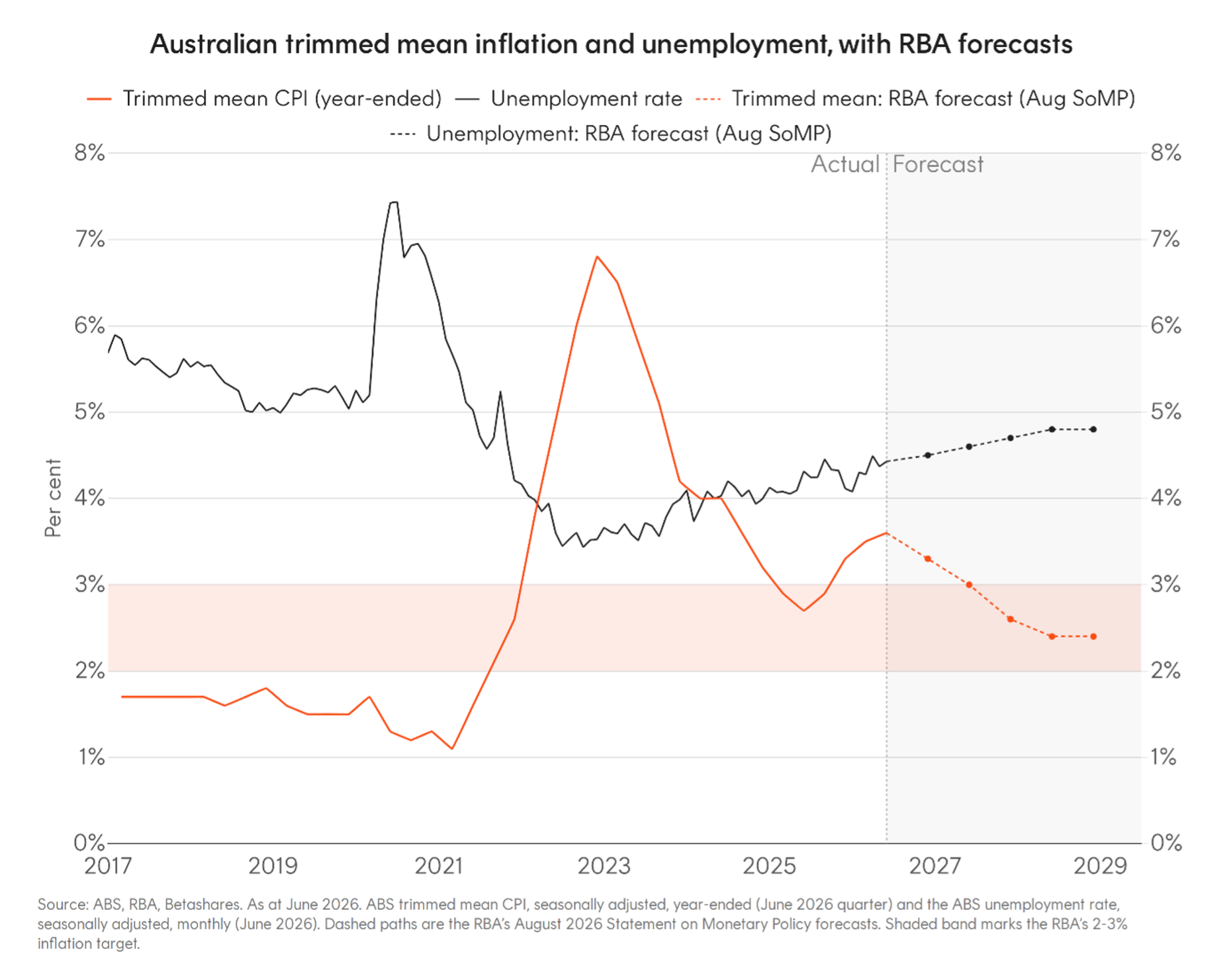
RBA expectations have turned less hawkish amid softer employment and inflation data in recent months. In its August Statement on Monetary Policy, the Bank revised its unemployment forecasts higher, expecting a rise from 4.4% currently to 4.8% over the medium term. Such a softening in employment, combined with underlying inflation returning to the 2-3% target band, would bring the dual mandate back into focus and likely put a ceiling on the cash rate and bond yields.
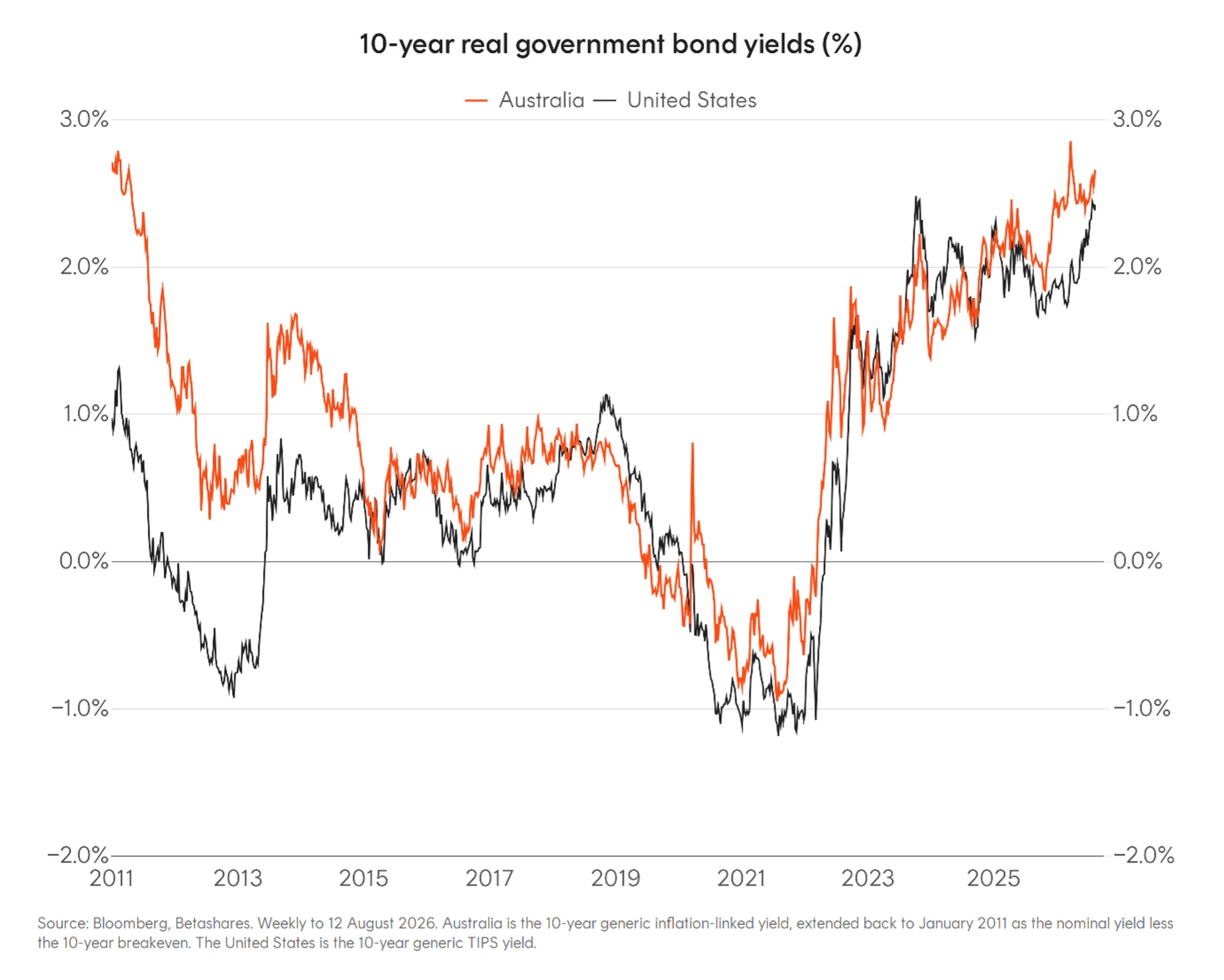
Despite the tepid economic outlook, the 10-year government yield is still around 5%, with a real yield (adjusted for inflation expectations) of 2.6 per cent. This is the highest level in 15 years and is priced for an economy running far hotter over the coming years than most forecasts expect.
However, any domestic bond rally faces external challenges, as higher US real yields and continued pressure on the Japanese long end keep global term premia high and could limit how much Australian bond yields fall. That mix favours a gradual bull steepening of our yield curve and further compression in the Australian-US 10-year yield spread, supporting ongoing outperformance of Australian government bonds.
Australian credit also remains relatively attractive, with AUD spreads generally higher and less volatile than equivalent credit in US dollars or Euros. Although local credit spreads are at the tighter end of the historical range, outright yields are still appealing to a broad range of investors. In addition, our credit market has very little technology exposure, insulating it from immediate AI infrastructure supply indigestion.
One risk to this benign outlook on spreads is that the AI build-out arrives here, and Alphabet’s inaugural AUD bond sale could signal the start of a Hyperscaler issuance wave in our “Kangaroo” market. Australia is experiencing its own mini boom in domestic data centre issuance, with CDC and NextDC both issuing in size this year.
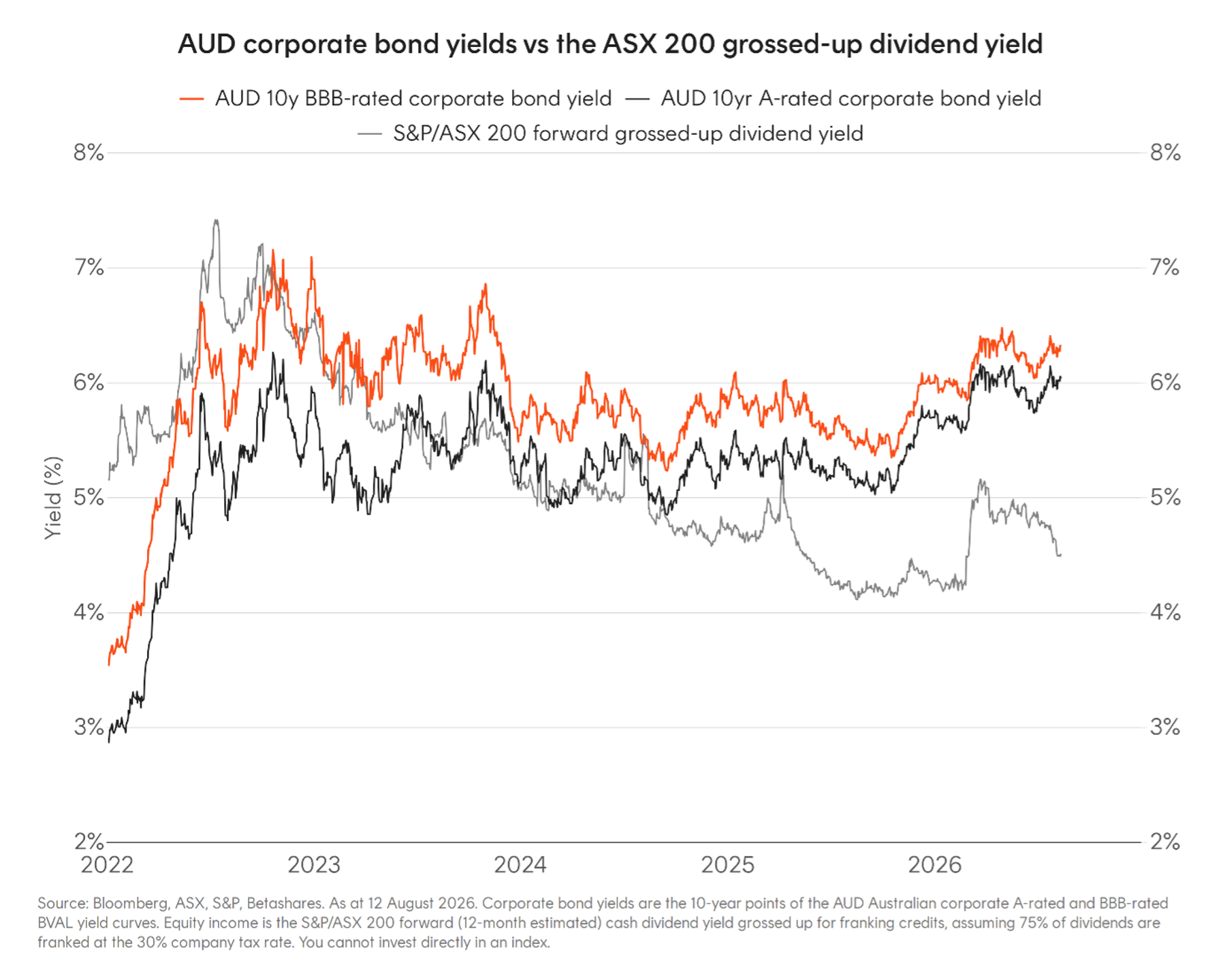
Although global headwinds remain, our view is not to be bearish on bonds, given the elevated real and nominal yields, alongside steeper curves providing compelling rolldown in high grade sectors. On a relative basis, we see more value in rates than credit, with Australian duration preferred over global. Fixed-rate AUD investment grade corporate bonds provide a nice balance of capital upside potential and compelling income, particularly at a time when dividend yields on Australian shares are challenged and the supply of bank hybrids continues to shrink, with many parts of the investment grade credit universe offering outright yields above 6%.
The CRED Australian Investment Grade Corporate Bond ETF provides exposure to a portfolio of senior, investment grade Australian fixed-rate corporate bonds, with income paid monthly at a rate expected to be higher than term deposits, government bonds, and benchmark bond index exposures.
CRED is designed to capture the relative value on offer in the Australian benchmark curve, with fixed-rate exposure positioned to benefit should softer domestic data pull yields lower, while adding a spread over already compelling government yields. With the domestic credit market having negligible exposure to the technology sector, CRED’s portfolio and AUD credit more broadly should be relatively well insulated from the supply indigestion facing US credit as the Hyperscaler build-out is increasingly funded through debt markets. CRED’s current yield to worst is 6.18%1.