

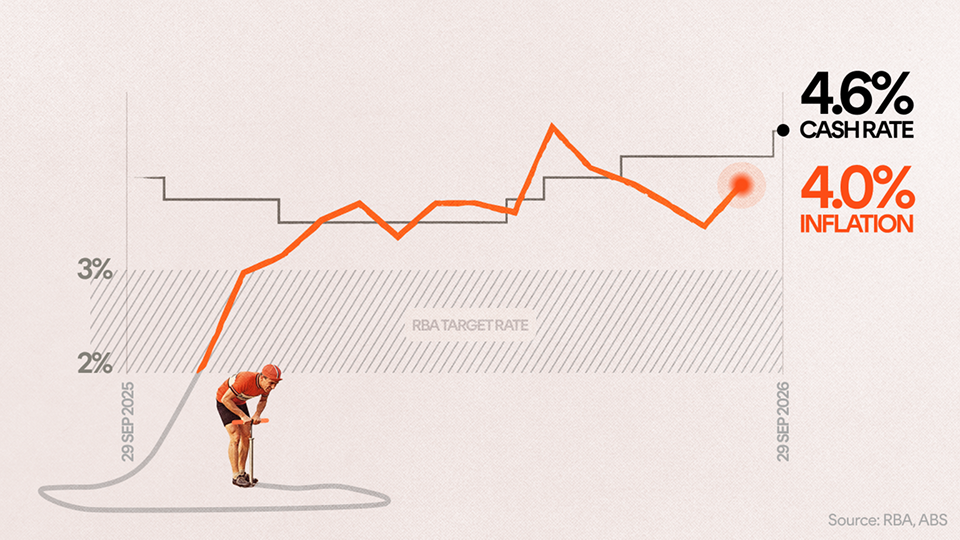


When interest rates rise, the effects can show up in more than your mortgage or savings account. They can also shape how companies earn revenue, what it costs them to operate and how markets value their shares.
The Reserve Bank has raised the cash rate four times this year, most recently to 4.60% on 29 September, and has signalled it could go further if needed. Inflation remains above its 2–3% target: ABS (the Australian Bureau of Statistics) figures show headline inflation was 4.0% in the year to August, up from 3.5% in July, while trimmed mean inflation held at 3.6%.
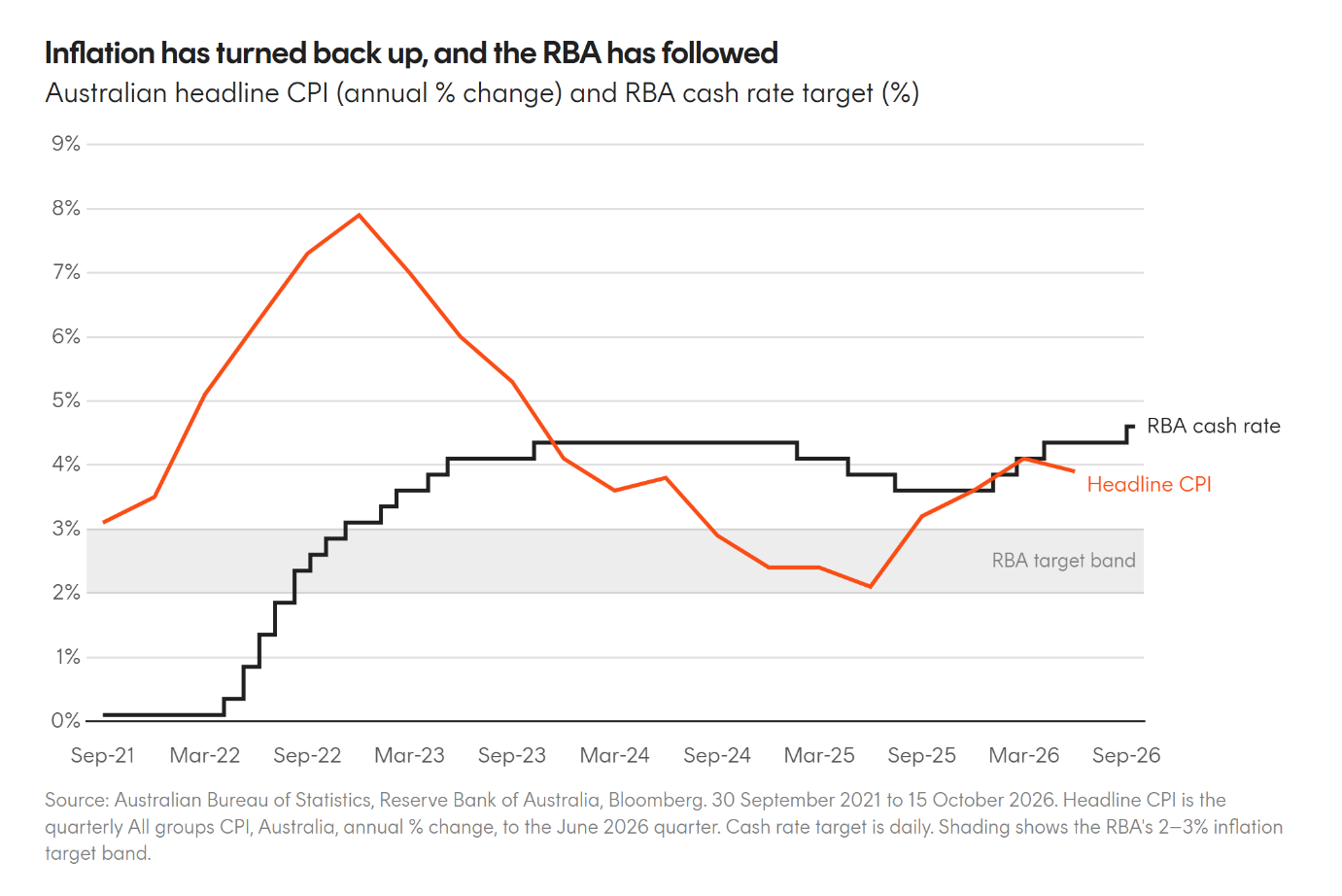
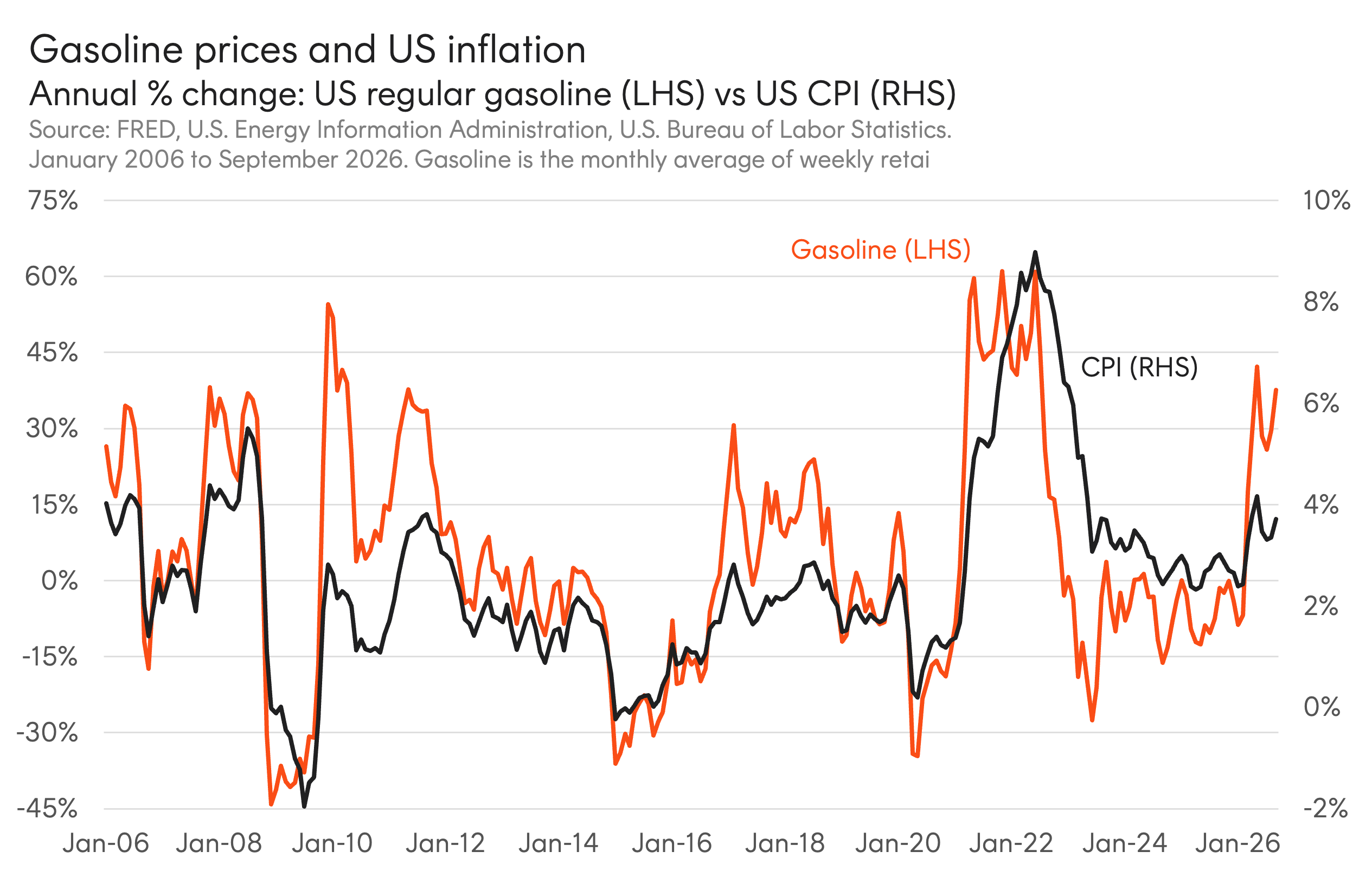
The pressures behind inflation come from different places, namely higher oil prices amid the conflict in the Middle East, as well as price increases in parts of the AI supply chain driven by the huge amounts of spending on data centres and related infrastructure.
Those forces can affect companies and sectors in different ways. Here are five ETFs with exposure to sectors and themes that could stand to benefit from higher inflation or interest rates.
1. Betashares Global Energy Companies Currency Hedged ETF (ASX: FUEL)
Energy sits at the source of much of today’s inflation. When oil prices climb, producers can earn more on every barrel they sell, lifting revenue and cash flow. The FUEL Global Energy Companies Currency Hedged ETF provides exposure to major global energy companies, including Chevron, ExxonMobil and Shell, with currency exposure hedged into Australian dollars. These companies are larger, more geographically diversified, and more vertically integrated than Australian-listed energy companies.
2. Betashares Global Royalties ETF (ASX: ROYL)
Royalties are an agreed upon payment made to an asset owner for the ongoing right to use their property, IP, or natural resources and usually calculated as a percentage of sales or revenue. They can often provide protection in inflationary environments as royalties are tied to top line revenues while royalty companies remain insulated from the direct operational risks and rising input costs of manufacturing, mining and distribution.
The ROYL Global Royalties ETF holds a portfolio of global companies that earn a substantial portion of their revenue from royalty income, royalty-related income and intellectual property (IP) income. In addition to a monthly income stream, ROYL also provides portfolio diversification benefits with royalty companies historically exhibiting lower correlation to other asset classes such as stocks and bonds.
3. FOOD Global Agriculture Companies Currency Hedged ETF (ASX: FOOD)
When food prices rise, revenue can also rise for the companies that grow, trade and distribute what we eat as demand for food tends to hold up even when household budgets are stretched. That can give agriculture companies more room to raise selling prices as general costs rise.
The FOOD Global Agriculture Companies Currency Hedged ETF holds large global agriculture companies outside of Australia, with currency exposure hedged into Australian dollars.
4. Betashares Global Banks Currency Hedged ETF (ASX: BNKS)
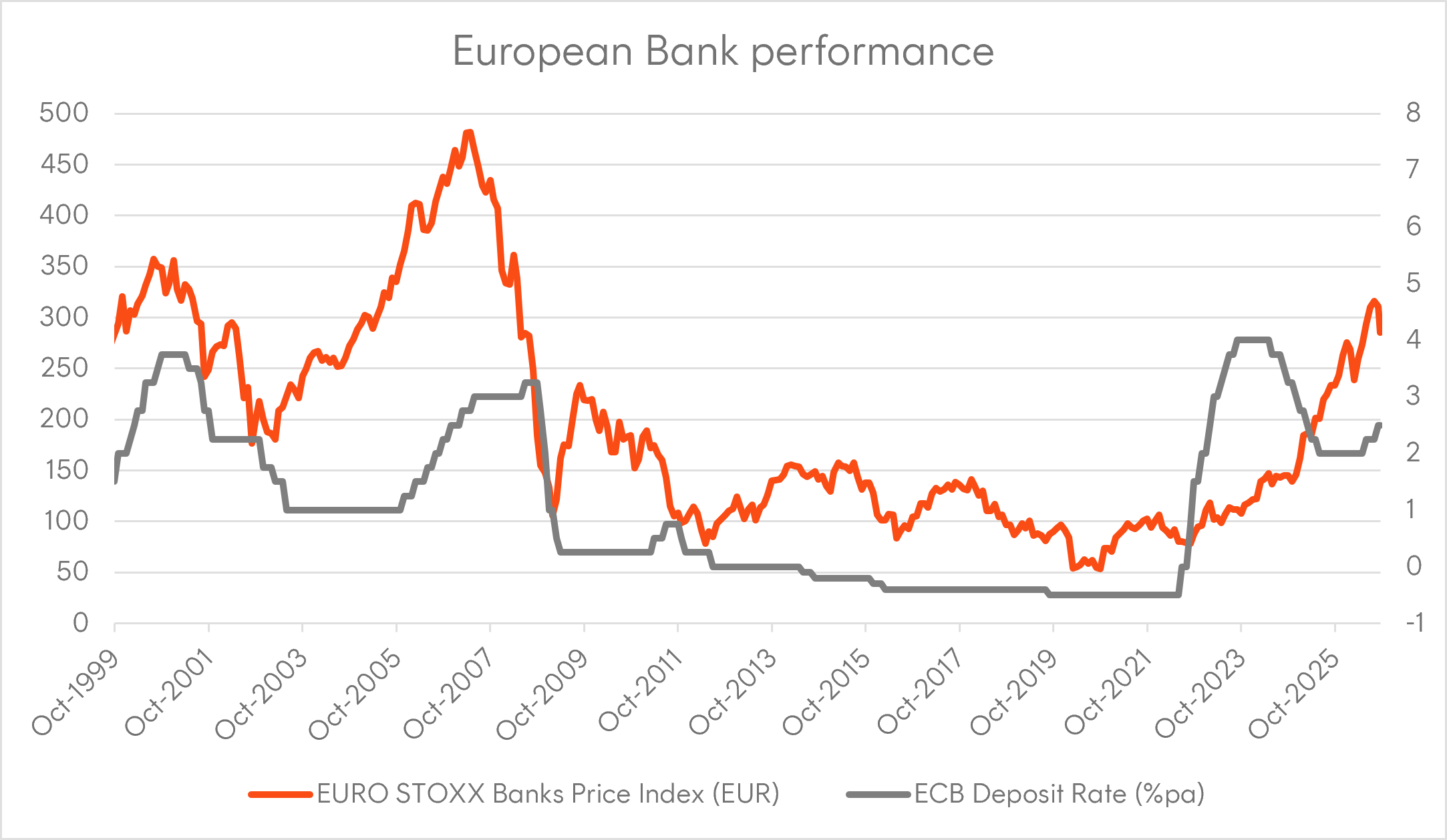
Banks may stand to be benefit when interest rates rise because medium-term lending rates tend to widen by more than short-term funding costs, which can support profit margins. Strong economic growth, which often accompanies rising rates, can also lift demand for credit. The BNKS Global Banks Currency Hedged ETF provides exposure to large banks outside Australia, such as JP Morgan Chase, BNP Paribas, Toronto-Dominion Bank and Citigroup.
5. Betashares Nasdaq 100 ETF (ASX: NDQ)
The RBA has pointed to the AI investment boom as one source of inflationary pressure, with heavy spending pushing up prices for some technology-related goods. The NDQ Nasdaq 100 ETF provides exposure to many of the companies on the receiving end of that spending, from chipmakers such as Nvidia to cloud and software businesses. Demand for AI products and services can support their earnings, and companies with pricing power can pass higher costs on to customers, which can help profits keep pace with inflation.
The bigger picture
Inflation and higher interest rates don’t affect every company in the same way. Higher energy or food prices may support revenue for some businesses, while higher borrowing and operating costs can put pressure on others. Interest rates can also influence bank margins and the value investors place on growth companies.
These ETFs offer exposure to specific sectors and themes that could stand to benefit from a higher inflation or interest rate environment, though their performance will depend on a range of market and company-specific factors. It’s important to consider how each fund’s holdings could respond to changing conditions, and whether that exposure fits your portfolio, goals and time horizon.
