



Every business depends on people. The treatment of employees, the standards expected of suppliers and the trust earned from customers can influence a company’s resilience and long-term prospects. For ethical investors, these relationships are central to assessing how a business creates value and whether its conduct aligns with their investment principles.
These are the social considerations represented by the ‘S’ in environmental, social and governance investing. They comprise working conditions, human rights, product safety and privacy. Artificial intelligence adds a new dimension, with implications for how companies organise work, assess customers and make decisions that affect people’s opportunities.
As businesses pursue the benefits of AI, ethical investors need to examine how those benefits are achieved and how the associated risks are managed. Established questions about fair treatment and accountability now extend to the design, deployment and oversight of technology. Understanding that connection is increasingly relevant to assessing responsible business practices.
The ‘what’: Understanding the ‘Social’ in ethical investing
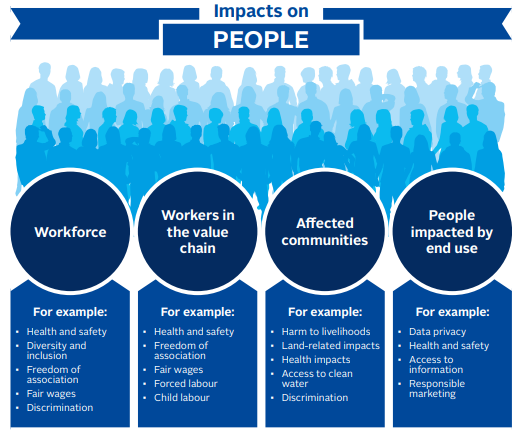
The social dimension of ethical investing considers how a company treats its employees, customers, suppliers and the communities impacted by its operations. It covers fair pay, safe working conditions, respect for human rights and equal access to opportunities. For investors, this means examining both a company’s commitments and how those commitments translate into everyday practices.
These responsibilities extend across supply chains, where companies need to identify and address risks such as unsafe conditions and labour exploitation. They also encompass product safety, fair treatment of customers and protection of personal information.
For communities, relevant considerations include how business activities affect livelihoods, access to resources and Indigenous Peoples’ rights. Investors can also examine whether a company’s lobbying and industry association memberships align with its stated social commitments.
The ‘why’: Making the investment case for human rights
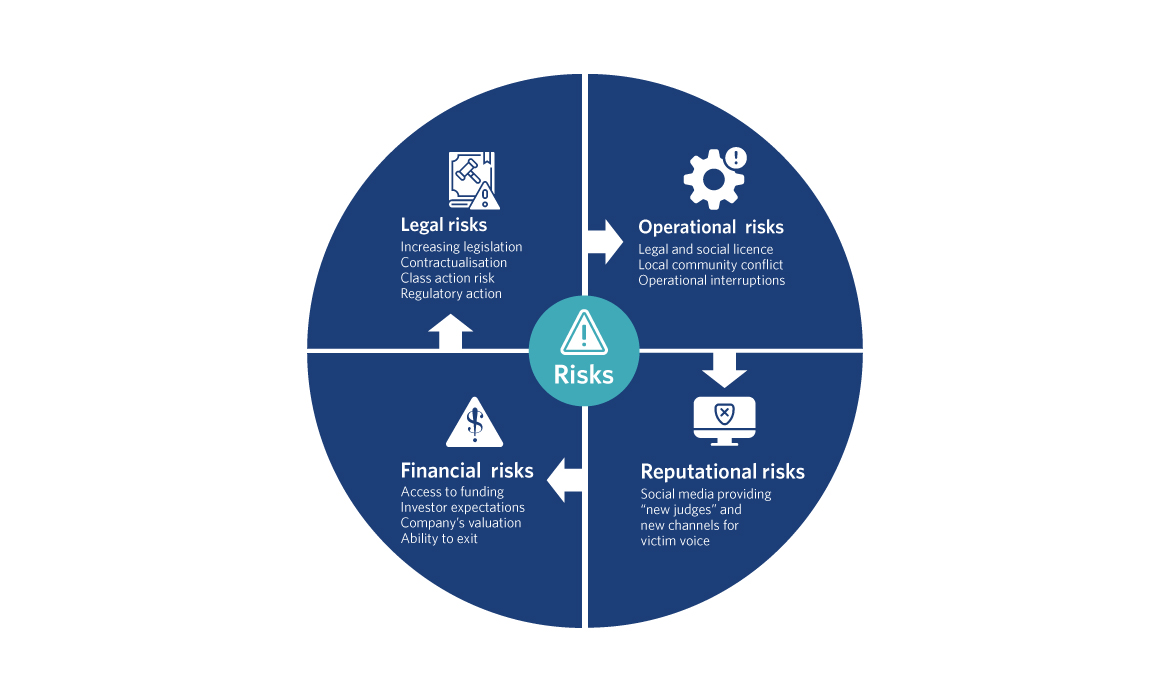
How a company treats people can have consequences for its operations, reputation and financial performance. For ethical investors, examining human rights and labour practices can therefore serve two purposes: aligning investments with their values and identifying risks not unmasked by financial statements alone.
MSCI research found that, between September 2013 and April 2025, companies with stronger supply-chain labour practices delivered higher cumulative returns vs weaker-scoring peers within the sample studied. The analysis accounted for sector, region and company size. This historical association does not establish that stronger labour practices caused the outperformance or will lead to higher future returns.1
The investment case also rests on risk management. Unsafe working conditions, poor supplier labour practices, and inadequate protection of customer information can create operational disruption, remediation costs and loss of trust. Assessing how companies identify and address these issues can help investors develop a fuller understanding of business resilience.2
Source: Herbert Smith Freehills
The UN Guiding Principles on Business and Human Rights and the OECD Guidelines for Multinational Enterprises provide a foundation for assessing corporate conduct. RIAA’s updated human-rights toolkit offers practical guidance for investors examining risks across global value chains. Greater transparency may reveal previously hidden problems, so investors should assess disclosure alongside the actions companies take to address those problems.3,4,5
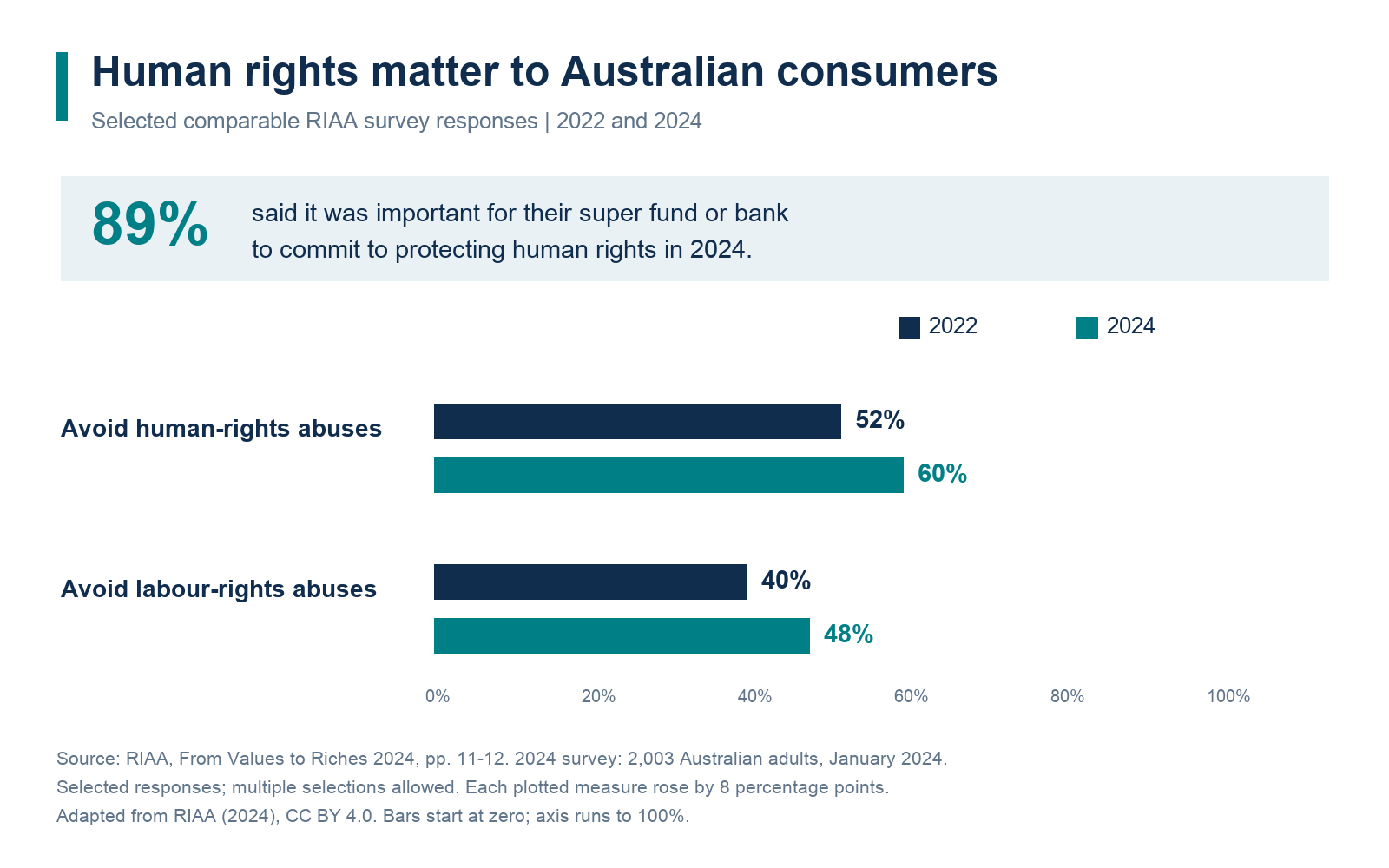
Consumer expectations also highlight the importance of human rights. RIAA’s 2024 survey found that 89% of Australians considered it important for their superannuation fund or bank to commit to protecting human rights.6
AI adds another social dimension
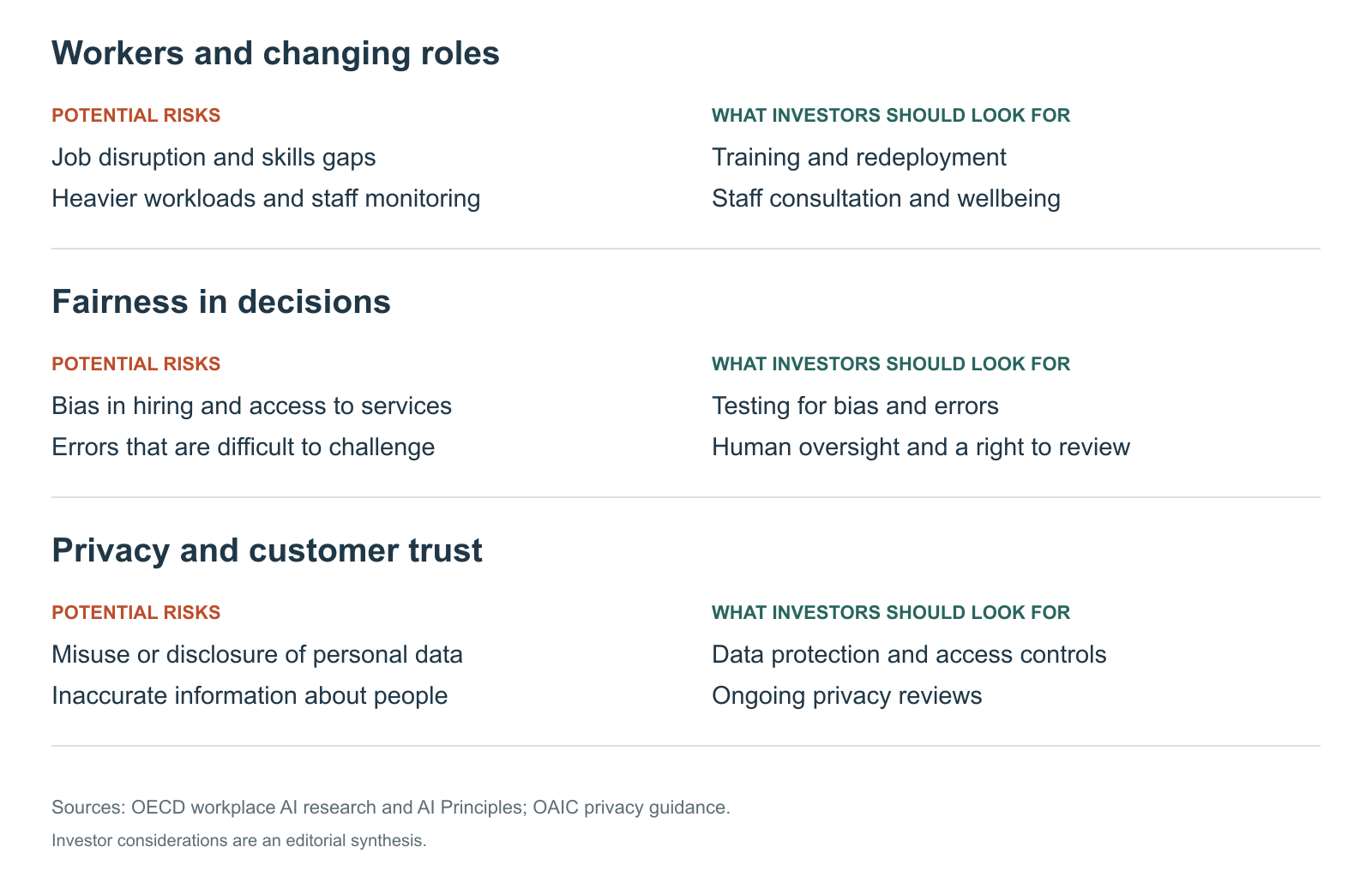
AI is changing how companies organise work, make decisions and use personal information. For ethical investors, these changes raise three areas of social risk.
Workers and changing roles
AI can disrupt roles, increase workloads and leave some employees without the skills needed for changing responsibilities. Workers may also face closer monitoring and less discretion over how they perform their jobs. Unequal access to training could further disadvantage those least equipped to adapt.
The OECD has documented potential benefits from workplace AI alongside concerns about work intensity and the collection and use of employee data. These risks make the way companies introduce and manage AI an important consideration for ethical investors.7
Investors should examine whether companies consult employees, provide accessible training and offer opportunities for redeployment. They should also assess whether productivity expectations allow staff to maintain service quality, exercise judgement and protect their wellbeing.
Fairness in decisions
When AI influences recruitment, customer assessment or access to services, biased data and flawed design can produce unfair outcomes. These risks can become harder to detect when decisions are difficult to explain, or staff accept automated recommendations without sufficient scrutiny.
The OECD AI Principles emphasise non-discrimination, transparency and the ability of affected people to challenge outcomes. They also recognise the need for human oversight and mechanisms to override systems that cause harm.8
For ethical investors, broad commitments to fairness need to be supported by evidence. This includes testing for unequal outcomes, monitoring errors and providing accessible review processes. Human oversight should involve people with the knowledge, time and authority to question a system’s recommendations and intervene.
Privacy and customer trust
AI can increase the risk that personal information is used beyond its original purpose, disclosed without authorisation or incorporated into inaccurate outputs. Individuals may struggle to understand how their information is used or to correct errors that affect them. The OAIC identifies these risks and recommends building privacy protections into the selection and ongoing use of AI products.9
Investors should examine whether companies limit unnecessary data collection, control supplier access and review privacy impacts throughout a system’s use. Staff training and clear accountability are also important, particularly when sensitive information is involved.
Across these areas, harm to people can also create business risks through workforce disruption, complaints and loss of trust. Assessing how companies identify, prevent and remedy harm is therefore an important part of evaluating responsible AI adoption.
Source: Betashares
Assessing the evidence
Social considerations can be incorporated into investing through screening, company analysis and engagement. The approach depends on the investor’s objectives and the methodology of the investment product.
Screening can exclude activities or conduct that fall outside defined ethical standards. Company analysis can examine how social issues affect business prospects. Engagement allows investors to seek better disclosure, clarify responsibilities and encourage improvements.
Each approach requires evidence. Investors should look for a connection between a company’s policies, the resources allocated to implement them and the outcomes it reports. Where information is incomplete, that limitation should remain visible in the assessment.
Comparisons also require care. Employee turnover may have different implications across industries, while an increase in reported concerns could reflect a more accessible reporting system. Context helps avoid rewarding limited disclosure or misinterpreting greater transparency.
Progress should also be assessed over a reasonable period. Training expenditure, for example, says little about effectiveness without evidence that employees have acquired useful skills. Similarly, the number of supplier audits reveals less than the findings and subsequent action. Investors can strengthen their assessment by asking companies to explain both the measures they use and the relationship between those measures and the outcomes they seek.
Across these issues, policies are a starting point. Investors should look for clear responsibilities, evidence that safeguards work and action to address shortcomings.
Connecting environmental, social and governance considerations
Environmental, social and governance issues frequently overlap. A transition to cleaner production can change workforce requirements and supplier relationships. Investment in new technology can affect energy consumption, employee responsibilities and customer privacy.
Governance connects these considerations to business decisions. Boards and executives need clear responsibility for identifying risks, allocating resources and responding when outcomes fall short of expectations.
For AI, this means establishing oversight that includes technology, human resources, customer service and risk management. Responsibility should be clear when a system is purchased from an external provider as well as when it is developed internally.
Investors can then assess whether commercial objectives and social commitments are supported by consistent decisions, incentives and reporting.
Putting social commitments into practice
The social dimension of ethical investing asks investors to look closely at how business decisions affect people. As technology changes workplaces and customer relationships, established responsibilities around fair treatment, safety and privacy remain essential.
Assessing these responsibilities requires evidence of how companies put their commitments into practice. Employee experiences, supplier standards, customer safeguards and responses to complaints can help reveal whether policies are effective.
For ethical investors, the focus is on whether companies recognise the consequences of their decisions and take responsibility when harm occurs. This provides a consistent basis for assessing social conduct as businesses adapt and innovate.