


Greg Liddell
9 minutes reading time
- Responsible investing


The importance of the natural world to sustainable investment, its risk and opportunities
“The truth is: the natural world is changing. And we are totally dependent on that world. It provides our food, water and air. It is the most precious thing we have, and we need to defend it.” – Sir David Attenborough
Nothing without nature
Investors increasingly understand that the performance of their portfolios does not exist in isolation from the natural world. Most shares, bonds, managed funds or ETF investments ultimately depend on the health of natural systems that provide clean water, fertile soils, stable climates and biodiversity. The Responsible Investment Association Australasia (RIAA) frames it bluntly: all global GDP depends, either directly or indirectly, on nature.1
This means that the degradation of natural capital – deforestation, water scarcity, species extinction – translates directly into financial risk.
 Source: European Forest Institute
For retail investors, who may hold superannuation funds, managed funds or ETFs, these risks are not a distant abstraction. They can affect company valuations, trigger regulatory costs and create reputational damage that impacts valuations. Conversely, opportunities linked to ecosystem restoration, biodiversity markets and nature-based solutions (NbS) can unlock new sources of financial return. This article explores why these risks and opportunities matter, how they can be assessed, and what to do next.
The twin crises: climate and nature
The climate and the nature crises are interlinked. According to the Intergovernmental Panel on Climate Change (IPCC), on a rolling 10-year average, human-caused emissions have warmed the planet by 1.1°C since pre-industrial times and exceeded 1.5°C in 2024 and in 2025 year to date, as at the end of July.2 Simultaneously, the Intergovernmental Science-Policy Platform on Biodiversity and Ecosystem Services (IPBES) has identified one million species at risk of extinction due to human activity. Roughly 75% of land, 66% of oceans and 85% of wetlands have already been altered or destroyed.3
For investors, this creates systemic risks. Declining pollinator populations threaten agriculture supply chains. Loss of mangroves and wetlands increases flood risk for infrastructure and insurance portfolios. Overexploitation of fisheries undermines entire food sectors. The World Economic Forum (WEF) estimates that US$44 trillion – over half of global GDP – is moderately or highly dependent on nature. In financial terms, nature loss could impose US$10 trillion in annual costs by 2050.14
Glaciers in retreat, the world is likely to breach 1.5oC in the next five years

Source: news.un.org
For investors, nature is not only an ethical concern but a financial one, impacting returns and the sustainability of the economic system itself.
Nature-related risks: Why they matter for portfolios
The Taskforce on Nature-related Financial Disclosures (TNFD) defines nature-related risks in three categories:5
-
Physical risks: Direct threats from ecosystem degradation, such as water scarcity or loss of fertile soils.
-
Transition risks: Costs arising from regulatory change, shifting consumer preferences or technological disruption (e.g. bans on deforestation-linked imports into the EU).
-
Systemic risks: Breakdown of entire systems, such as Amazon deforestation reducing rainfall across South America, destabilising agriculture and energy generation.
Deforestation – the world loses around 10 million hectares of forest each year
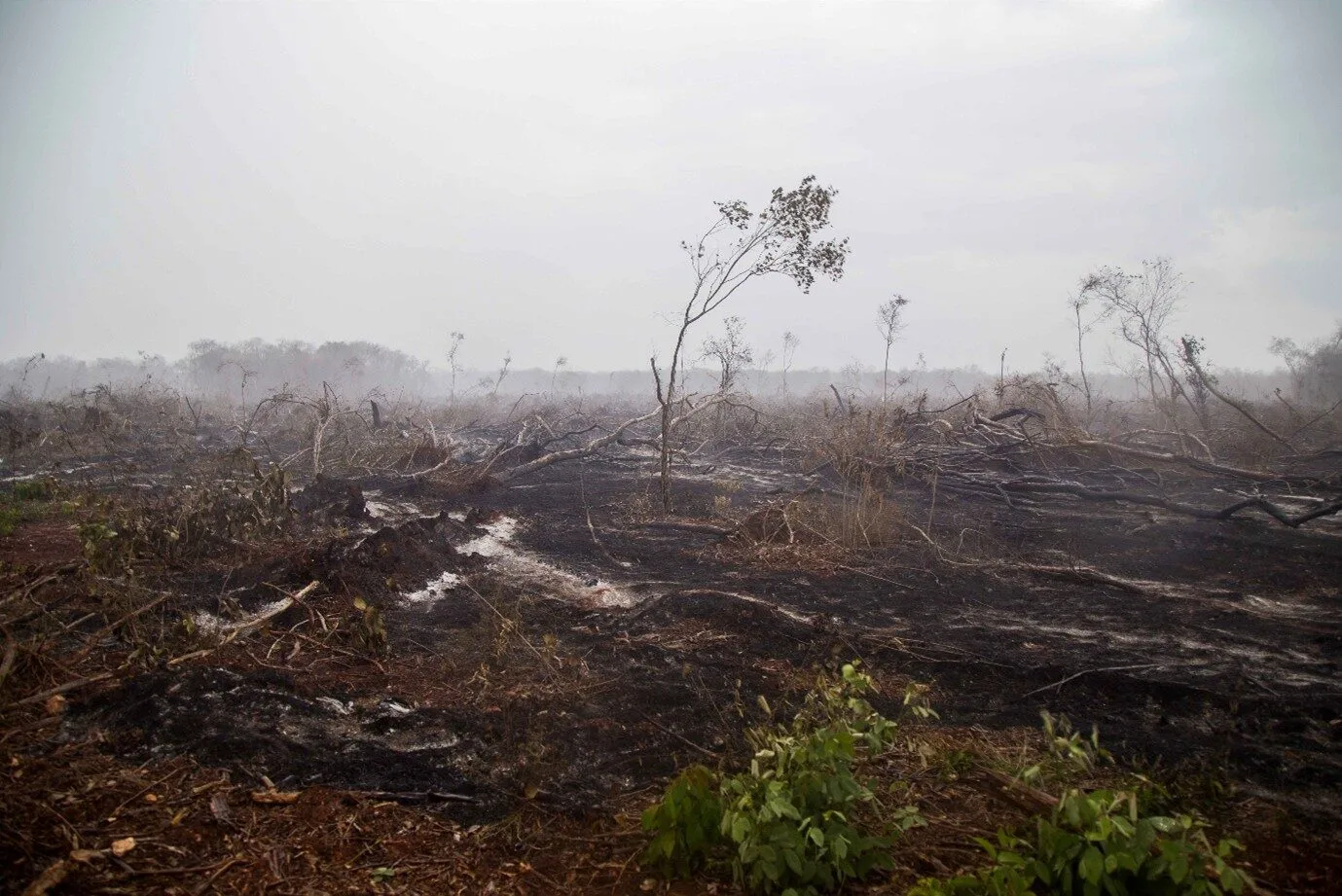
Source: news.mongabay.com
For investors, these risks materialise in company earnings. A food company that relies on palm oil could face supply chain disruption from new deforestation regulations. An electric utility using high volumes of water for cooling may face higher costs or stranded assets in drought-prone regions. Even index investors cannot diversify away from systemic risk: if ecosystems were to collapse, portfolio-wide losses would occur.
Nature-related opportunities: The other side of the coin
Just as climate change has spurred growth in renewable energy and green finance, nature-related risks can create opportunities. The RIAA Nature Investor Toolkit highlights several areas where investors can benefit:
-
New markets: Australia’s Nature Repair Act (2023)6 created a voluntary biodiversity credit market. Similar systems are being piloted in New Zealand and discussed globally.
-
Consumer demand: Companies offering sustainable food, regenerative agriculture or circular economy packaging are increasingly attractive to younger consumers.7
-
Resilient business models: Firms investing in water efficiency, soil health or ecosystem restoration can lower long-term input costs and regulatory risk.8
-
Government incentives: The EU LIFE Programme, running from 2021 to 2027, provides €5.43 billion to co-fund action on environmental protection, nature conservation and climate action.9
-
In the UK, Canada, Brazil and Costa Rica, programs have been established to fund and co-fund forest restoration and conservation that delivers carbon sequestration and biodiversity outcomes.10
Currently, there are very few dedicated nature-impact investment vehicles open to Australian retail investors. Retail investors can still gain exposure to nature-positive themes by (i) selecting super funds and managers with explicit biodiversity/deforestation policies and active stewardship; (ii) using broad sustainability or climate transition funds that embed nature screens and engagement; and (iii) allocating to green bond or sustainability-linked bond funds whose use-of-proceeds includes restoration, water security or sustainable land use. Investors can also tilt portfolios toward listed companies with credible nature strategies (e.g., circular materials, water management, regenerative agriculture supply chains) and monitor manager voting on nature issues.
Global and local regulatory drivers
Policy is rapidly moving from voluntary guidelines to binding requirements, with several frameworks reshaping the investment landscape.
In Australia, the EPBC Act reforms (2024) will create Environmental Protection Australia as a regulator, alongside Environment Information Australia. Together with the Nature Repair Act, this signals stronger enforcement of biodiversity protection.11
In New Zealand, reform of the Resource Management Act and consultation on a biodiversity credit system will result in new compliance costs and opportunities.12
In Europe, the EU Nature Restoration Law (2024) sets legally binding targets, while the EU Deforestation Regulation requires commodities traded in the EU to be deforestation-free.13
At the global level, the Kunming-Montreal Global Biodiversity Framework commits countries to protect 30% of land and sea by 2030.14
For investors, these developments mean companies that fail to manage nature-related impacts could face fines, trade restrictions or exclusion from markets. Conversely, those that adapt early may enjoy first-mover advantages.
Tools for assessing nature risks and opportunities
Investors often feel they lack the tools to assess biodiversity risks. The RIAA toolkit points to a growing ecosystem of resources, including:
-
ENCORE (Exploring Natural Capital Opportunities, Risks and Exposure) helps map economic activities to ecosystem dependencies and impacts.15
-
IBAT (Integrated Biodiversity Assessment Tool) provides data on protected areas and biodiversity-sensitive regions.16
-
Global Forest Watch tracks deforestation in near real-time.17
-
TNFD LEAP Framework offers structured disclosure recommendations.18
-
Nature Action 100, a collaborative investor engagement initiative similar to Climate Action 100+, targets companies with high biodiversity impacts.19
For retail investors, these tools may be filtered through intermediaries such as fund managers, advisers and rating agencies. But knowing they exist empowers individuals to engage on these important issues.
The role of stewardship and engagement
Retail investors are typically indirect owners of large corporations via ETFs, managed funds and superannuation. Engagement – communicating with companies to improve disclosure, reduce harmful practices and adopt positive ones – can be a powerful lever. The RIAA toolkit outlines strategies for:
-
Voting: Supporting shareholder resolutions on deforestation, water use or biodiversity protection.
-
Policy advocacy: Encouraging regulators to adopt stronger disclosure and protection standards.
-
Communication: Asking companies to report clearly on nature-related policies, risks and impacts.
Case studies
Case studies can highlight the impact of failing to manage nature risks. When the Bee Stings, a report published by Bloomberg New Energy Finance, looks at 10 examples where companies incurred substantial financial and reputational damage because of failure to adequately manage nature risks.
These include 3M’s US$10.5 billion settlement for polluting waterways with ‘forever chemicals’ (PFAS) and PG&E’s liability for California wildfires that led to the company’s bankruptcy in 2019.20
3M’s contamination of waterways led to a US$10.3 billion payout Source: Alabama Political Reporter
Indigenous knowledge and equity considerations
An important theme in the RIAA toolkit is engagement with Indigenous Peoples and Local Communities (IPLCs). These groups are the custodians of their ecosystems and, as a result, often bear disproportionate impacts of biodiversity loss. Incorporating their perspectives through Free, Prior and Informed Consent (FPIC) is not only an ethical imperative but also a practical way to reduce social licence risk.
Retail investors can advocate for this by supporting investment programs that embed Indigenous engagement in their stewardship.
Practical steps for retail investors
-
Understand your exposure: Review the responsible investment policy of your super fund, investment manager or ETF provider. Does it mention biodiversity, deforestation or water use?
-
Support stewardship: Vote your shares where possible, or ensure your fund manager votes, in line with biodiversity goals.
-
Allocate to opportunities: Consider thematic products focused on natural capital or diversified ESG funds that explicitly exclude companies with negative impacts on natural capital.
-
Stay informed: Use publicly available tools like ENCORE or Global Forest Watch to track high-profile issues such as deforestation in supply chains.
Why this matters to the retail investor of tomorrow
For many retail investors, particularly in Australia, superannuation is their largest financial asset. With 75% of managed funds in Australia represented by RIAA members, the industry is shifting. Just as climate disclosure has gone from niche to mandatory, nature-related disclosure will likely follow the same trajectory.
In the long run, ignoring nature-related risks is not just an ESG issue – it is a fiduciary one. Courts in Australia and overseas have already linked fiduciary duty with the need to manage climate risk. It is only a matter of time before similar reasoning applies to biodiversity and ecosystems. By asking questions and choosing products aligned with nature-positive outcomes, retail investors can safeguard their financial futures and contribute to the preservation of the natural systems on which all economies depend.
The RIAA Nature Investor Toolkit and other resources mentioned in this article can be accessed here or through a free account on research hub Altiorem at: https://altiorem.org/research/nature-investor-toolkit/.
Sources:
1. https://www.responsibleinvestment.org/events-news/item/nature-investor-toolkit-launch
2. https://www.ipcc.ch/synthesis-report/#:~:text=Read%20the%20report-,About,new%20Bureau%20in%20July%202023.&text=The%20Synthesis%20Report%20of%20the,the%20IPCC%20in%20February%202020 and https://news.un.org/en/story/2025/05/1163751#:~:text=Audio%20Hub-,Climate%20change:%20World%20likely%20to%20breach%201.5%C2%B0C%20limit,C%20above%20pre%2Dindustrial%20levels.
3. https://www.un.org/sustainabledevelopment/blog/2019/05/nature-decline-unprecedented-report/
5. https://tnfd.global/wp-content/uploads/2023/09/Getting-started-guidance.pdf?v=1734112424
6. https://www.dcceew.gov.au/environment/environmental-markets/nature-repair-market/legislation
7. https://buyinggreen.triviumpackaging.com/
9. https://cinea.ec.europa.eu/programmes/life_en
11. https://www.dcceew.gov.au/environment/epbc/epbc-act-reform
12. https://erlaw.org.au/the-proposed-resource-management-reform-in-new-zealand
13. https://environment.ec.europa.eu/topics/nature-and-biodiversity/nature-restoration-regulation_en
15. https://www.encorenature.org/en
16. https://www.ibat-alliance.org/
17. https://www.globalforestwatch.org/
19. https://www.natureaction100.org/
20. https://tnfd.global/wp-content/uploads/2023/12/BNEF_Case-Studies_-Nature_Risk_When-bees-sting.pdf