


Financial markets have reacted nervously to the Democratic “clean sweep” of the US Midterm elections. While equity markets initially bounced as election uncertainty was removed and the results were not contested by President Trump, concerns about potential new regulatory roadblocks to the artificial intelligence data centre rollout have since spooked markets.
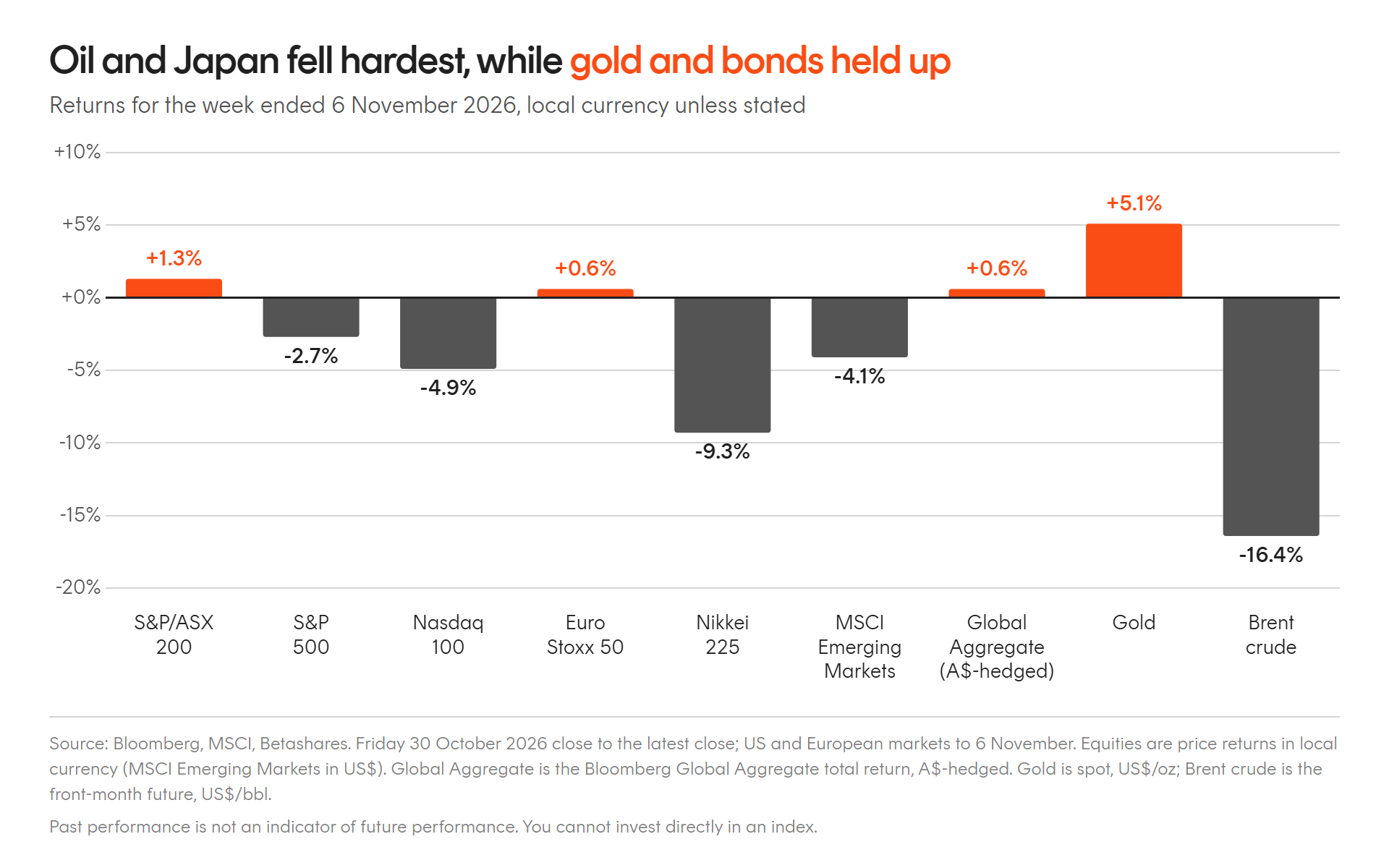
Over the week, the more tech-heavy US and East Asian equity indices fell, while Australian and European markets proved relatively resilient. Oil fell, while bonds and gold proved to be defensive again.
This note summarises current Betashares Investment Committee thinking on the economic and market outlook following this seismic upheaval in US politics.
Gridlock could be good
The US economy has long managed to perform well despite the often-dysfunctional nature of US politics. In this regard, we suspect the coming year will be more of the same.
On the one hand, the combination of a Republican President and Democrat-controlled Congress could result in more policy gridlock. Markets often like gridlock, and typically have performed well in the year following US Midterms. Some of the less market-friendly Democratic policies – such as increased taxes or higher spending on social services – will likely be met with a Presidential veto.
In turn, the Democrats will aim to rein in Presidential excess where they can, though Trump has largely exercised power to date through Executive Orders. One potential market concern is Budget negotiations, with the risk of more government shutdowns and periods of uncertainty over Treasury’s ability to fund interest obligations if disagreement becomes protracted.
A more measured pace of data centre construction may also be beneficial
The rollout of US data centres is likely to face increased regulatory risk, particularly at the State level, where Democrats don’t face a Presidential veto. Texas’ new governor-elect, Gina Hinojosa, has called for a moratorium on data centres, which is significant as Texas accounts for 26% of announced and under-construction US data centre capacity.1 The Philadelphia Semiconductor sector index (SOX), which had been the key beneficiary of AI capex for much of this year, experienced its largest one-day fall since Covid.2 That said, we view the risk to data centres already under construction as relatively low; the impact is more likely to shift where future data centres are planned, rather than materially curtail the build-out. End customer demand for AI compute isn’t going away and even State-based Democrats would likely welcome the economic activity generated by data centre construction, albeit with extra conditions – such as the need to generate their own power.
However, if the data centre build-out does slow, this can heighten the value of existing cloud infrastructure, supporting hyperscaler margins and application software. A less frenetic pace of capital spending would also limit the drain on hyperscaler free cash flows, which has been a growing market concern of late. It is notable that hyperscalers Microsoft, Amazon and Alphabet all finished higher after the Midterms.
Softer capital spending would also mean less upward pressure on US economic activity and inflation, lessening the need for further Fed tightening. Indeed, we note that the latest risk-off move in equity markets has been associated with a decline in bond yields – suggesting bonds could offer a good source of diversification and downside protection if AI-related concerns intensify.
The oil price has fallen, but Iran is still the wild card
The situation in Iran remains the key risk to global markets, as the implications of the Democratic victory could cut two ways. On the one hand, the Iran war and associated rise in petrol prices greatly hurt the Republican Party electorally, as pollsters warned. US voters provided an unambiguous signal that they want Trump to extricate the US from the conflict. In response, oil dropped sharply around the poll, reducing inflation and rate hike expectations.
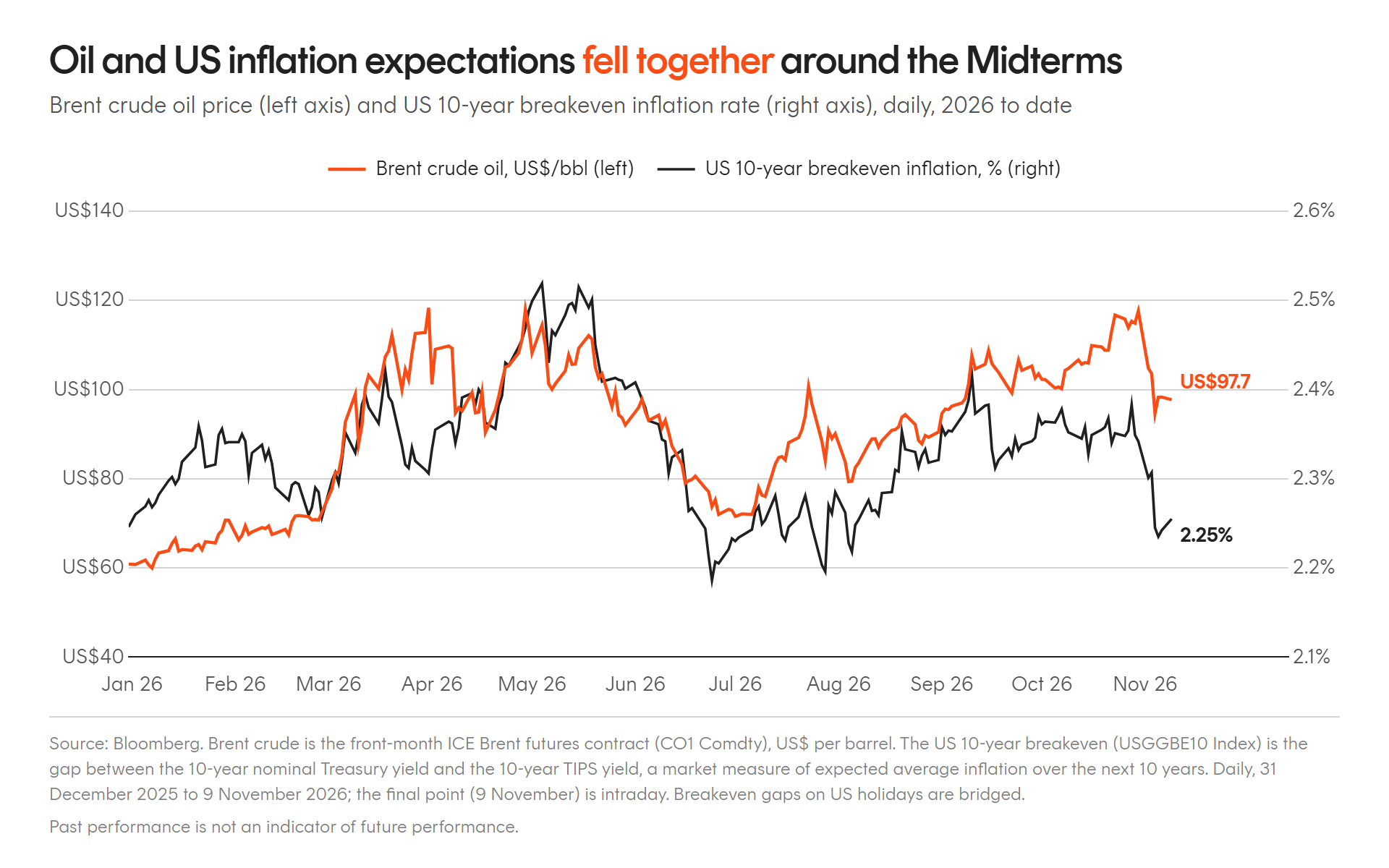
But the risk remains that escalation or miscalculation by any of the actors involved (the US, Iran, Israel or the Houthis) could exacerbate oil supply bottlenecks or draw out the conflict while strategic reserves continue to dwindle.
Irrespective of whether the US and Iran can come to any form of resolution, we note the world will continue to reduce its dependence on traditional oil supply routes through the Strait of Hormuz. Energy substitution and alternate supply routes could keep oil from hitting new highs even if Iran and the US fail to find a clean off-ramp.
The US economy and corporate earnings continue to grow strongly
The US economy continues to deliver, with last week’s payrolls report more than doubling expectations with 165,000 jobs added and upward revisions to prior months.3
Against this backdrop, third quarter S&P 500 earnings growth will come in above 25%, the third quarter in a row above this mark.4 All sectors are reporting positive growth, with Healthcare reporting the largest upside surprise. S&P 500 earnings have outrun price returns, causing price-to-earnings valuations to compress considerably. The S&P 500 Technology sector forward 12-month P/E ratio now sits at 17.3x, versus its 10-year average of 23.1x. For the S&P 500 as a whole, the forward P/E has fallen from 22.0x at the start of the year to 17.7x, as shown in the chart below.
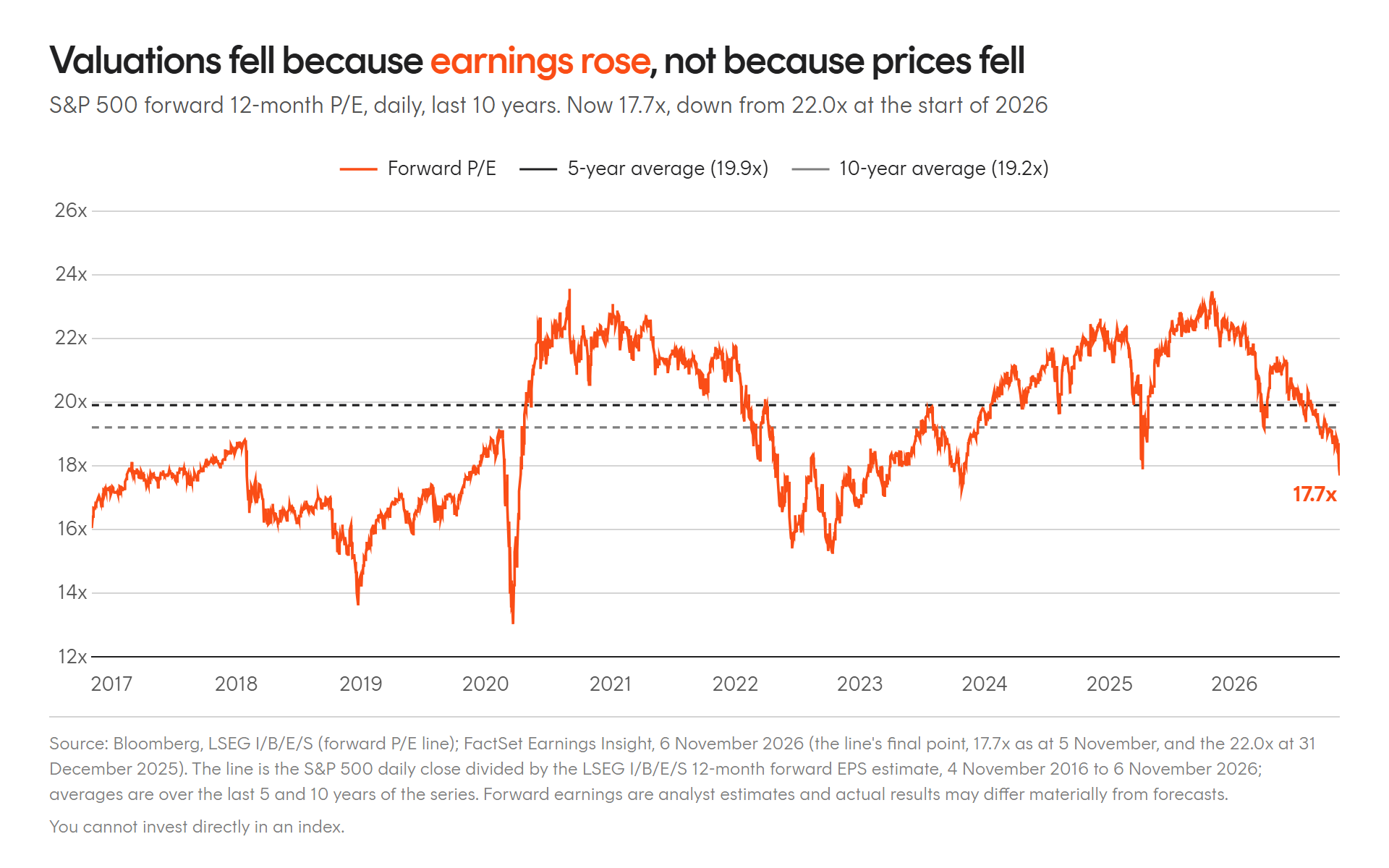
Lower valuations and easing bond yields provide can some margin of safety should 2027 earnings fall short of expectations.
Given the still-positive outlook for global economic growth and corporate earnings, we remain comfortable with our modest overweight to growth versus defensive assets. With Australian economic growth under significant downward pressure, moreover, we also continue to prefer global equities over Australian equities.
Stay the course: no change to dynamic asset allocation
Although the Investment Committee continues to monitor the US political and Iranian situations carefully, no changes have been made to the asset allocations of the Betashares Dynamic Managed Account portfolios at this stage.
The following information represents the Betashares Investment Committee’s current views on the potential economic and market implications of the US Midterm elections. These views are subject to change as economic, political and market conditions evolve.
For financial adviser use only. This material is intended for financial advisers and is not intended for distribution to retail clients.